Home Bitcoin mining.
Honest economics, sovereign motivations.
Running a Bitaxe or an old S19 at home is almost certainly unprofitable at current electricity rates and difficultydifficultyA number that Bitcoin adjusts every 2,016 blocks (roughly two weeks) to keep the average block time at 10 minutes regardless of how much hashrate is on the network. Higher difficulty means each hash has a lower chance of finding a block.. Why do it anyway: you run your own infrastructure, you learn how Bitcoin's security works, and you have a lottery ticket for a full block rewardblock rewardThe brand-new Bitcoin a miner earns for adding the next batch of confirmed transactions to the public ledger. The reward is how new Bitcoin enters circulation, and it gets cut in half every four years..
Viewpoint. Besides explaining the topic, this page makes the site’s case on money and Bitcoin. The facts are sourced; that case is the site’s view. How pages are labeled.
This page covers the economics and reasons for home mining. For a first-person walkthrough of running a Bitaxe, see Mining Explained by a Miner. For measured numbers from a real four-unit setup, see Bitaxe Gamma Duo Review.
A Bitaxe at home produces approximately 1.2 to 2.0 TH/s. Global hashratehashrateThe total computational power a miner or the entire Bitcoin network applies to finding blocks, measured in hashes per second. More hashrate means more security but also more competition for block rewards.Full definition is around 926 EH/s (7-day average to September 24, 2026). Your share is approximately 0.0000002%. Expected pool earnings: a few cents a day. Expected solo block: thousands of years. Why some people still do it: education, sovereignty, heat recovery, and the lottery appeal of a full block reward.
Section 1 · The honest economics
What mining does
- Miners solve a computational puzzle (finding a hash below a target value) to add a block of transactions to the blockchainBlockchainA public transaction ledger, grouped into blocks that each link to the one before. Every Bitcoin full node checks each block itself and follows the valid chain with the most accumulated proof of work. Recent blocks can occasionally be replaced (a reorganization); the number of computers does not decide validity.Full definition.
- The winner earns the block subsidyblock subsidyThe new BTC created with each block, paid to the miner who finds it. Started at 50 BTC in 2009, halves every 210,000 blocks. Currently 3.125 BTC after the April 2024 halving. (currently 3.125 BTCBitcoin (BTC)The ticker symbol for Bitcoin, used on exchanges and in price quotes.Full definition after the April 2024 halvingHalvingThe scheduled event, built into Bitcoin's code, that cuts the new bitcoin paid to miners per block in half. It happens every 210,000 blocks, about every four years; the April 2024 halving at block 840,000 cut it from 6.25 to 3.125 BTC, slowing the rate of new supply.Full definition) plus all transaction fees in that block.
- The puzzle adjusts in difficulty every 2,016 blocks (approximately two weeks) to ensure blocks average 10 minutes regardless of total mining power.
The home miner's reality
- Global hashrate, 7-day average to September 24, 2026: approximately 926 exahashes per second (EH/s) verify×DON'T TRUST, VERIFYClaim: Global Bitcoin hashrate is approximately 926 EH/s (7-day average to September 24, 2026).Verify at: mempool.space mining stats ↗ · blockchain.com hashrate chart ↗ Source 1 in the list belowHashrate fluctuates daily; verify the live figure when planning..
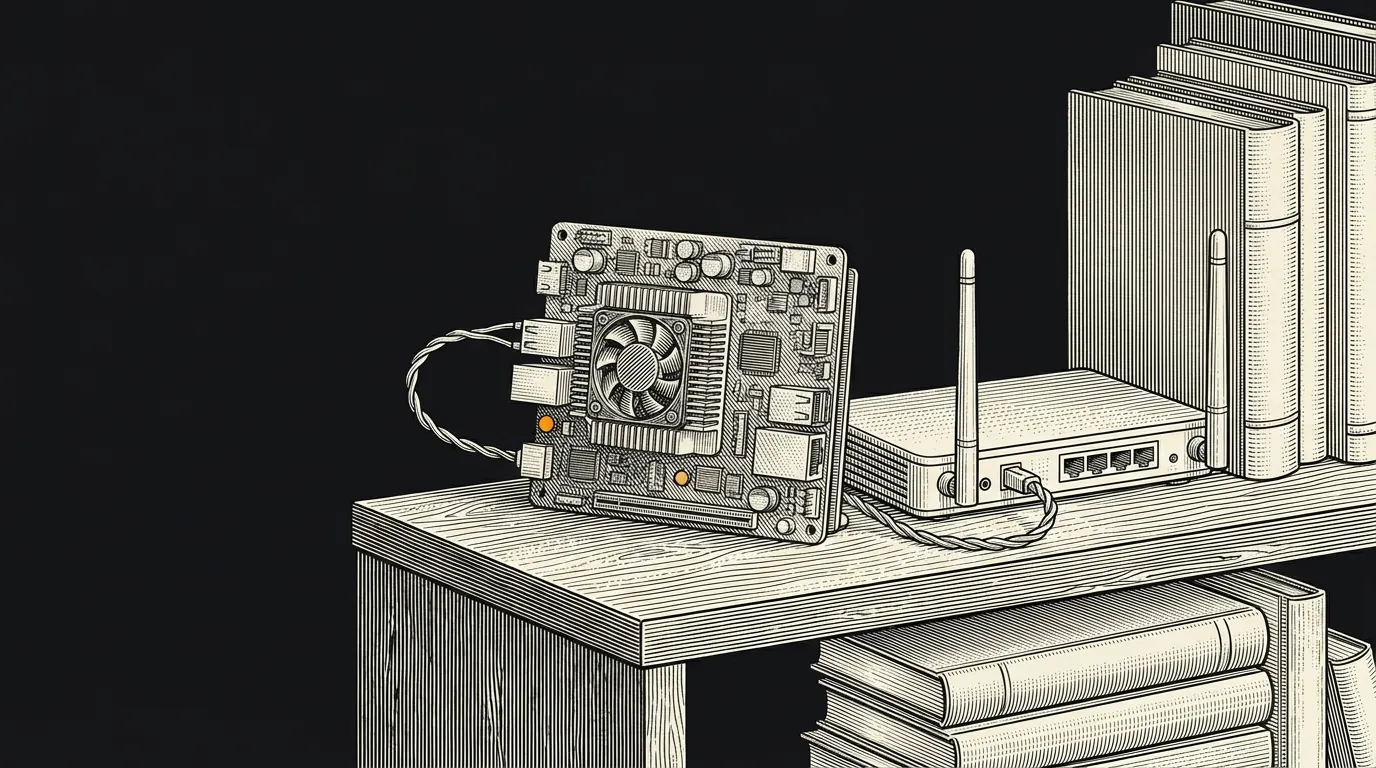
- A Bitaxe Gamma (open-source ASIC miner): approximately 1.2-2.0 TH/s.
- Your share of global hashrate: approximately 0.0000002%.
- Expected time to find a block solo: thousands of years.
- In a pool: you earn a few cents per day at this hashrate.
Power consumption
- Bitaxe: approximately 15 to 20 watts at the wall.
- At $0.12/kWh: approximately $1.50 to $2.00 per month in electricity.
- Expected daily pool earnings at this hashrate: approximately $0.05 to $0.08 from the block subsidy, before pool fees (at 926 EH/s, the 7-day average to September 24, 2026, and the September 19, 2026 close of $81,262).
At these figures, pool earnings roughly match the electricity bill, so for a profit-seeking home miner the hardware does not pay for itself. See the solo mining calculator for current numbers using live difficulty.
Section 2 · Solo mining (the lottery)
Instead of joining a pool and earning tiny fractions of each block reward, you compete for the full block reward alone. If you find a block, 3.125 BTC. If you do not, you earn nothing regardless of how much you mined.
The honest framing
- Solo mining on a Bitaxe is a lottery ticket.
- The lottery has a genuine payout (full block reward).
- The odds are extremely long.
- Unlike most lotteries, you are also contributing to Bitcoin network security while you play.
Solo CK Pool
The most popular solo-mining pool where miners keep the entire block reward if they find a block verify×DON'T TRUST, VERIFYClaim: Solo CK Pool pays the full block reward to the lucky miner, with a small fee on winning only.Verify at: solo.ckpool.org ↗ Source 2 in the list belowPool terms can change; verify before pointing your hashrate.. Unlike traditional pools there is no block-reward sharing. You either win the full reward or earn nothing. Small fee on winning only.
Self-hosted public pool
You can run your own pool software (Public Pool) and point your Bitaxe at it. Fully self-sovereign mining: your own node, your own pool software, your own infrastructure.
Section 3 · Why do it anyway
Education
Understanding SHA-256Secure Hash Algorithm 256-bit (SHA-256)The cryptographic function Bitcoin uses to convert any data into a fixed-length code, used in mining and transaction verification.Full definition, proof of workproof of workBitcoin's security trick. Computers around the world race to roll the right random number, burning real electricity in the process. The winner adds the next batch of transactions and earns new Bitcoin. Because cheating means burning more electricity than everyone else combined, attacking the network costs real money.Full definition, and difficulty adjustment at a practical level is valuable for anyone who holds Bitcoin. Running hardware that mines makes these concepts concrete.
Sovereignty
Your mining hardware is part of the network that secures Bitcoin. Even a tiny amount of hashrate contributes to decentralizationdecentralizationIn Bitcoin: no single person, company, or government controls the ledger, the rules, or the money supply.Full definition.
Heat recovery
At 15 to 20 watts, a Bitaxe can serve as a small desk heater in winter. The electricity cost partially replaces heating costs.
The lottery appeal
Verified home miners have, on rare occasions, found blocks against very long odds. The payout if you win is life-changing. The cost of trying is a few dollars per month in electricity.
Section 4 · Industrial mining (why home is uncompetitive)
Professional mining farms run S19 XP, S21, or next-generation ASICs at approximately 20 to 30 J/TH. They negotiate power contracts at $0.03 to $0.06/kWh, often for stranded energy or behind-the-meter installations. They operate at industrial scale where economies of scale and power costs make mining profitable.
The energy debate (steelmanned)
Bitcoin mining uses approximately 50 to 70% renewable energy by some estimates. Methodology varies significantly by study; this estimate is contested.
- The pro argument: Bitcoin uses energy that would otherwise be wasted (stranded hydro, flared gas, curtailed wind). Miners are the buyer of last resort for otherwise unsellable energy.
- The counter: Bitcoin adds to total energy demand and marginal energy demand affects the grid. Where mining sits on the merit-order curve depends on the location.
- The data: mining's global electricity use is approximately 0.5% of global consumption, comparable to global gaming or always-on TVs verify×DON'T TRUST, VERIFYClaim: Bitcoin mining uses approximately 0.5% of global electricity consumption.Verify at: Cambridge Centre for Alternative Finance Bitcoin Electricity Consumption Index ↗ Source 3 in the list belowCCAF maintains the most-cited live estimate. Methodology is documented and updates monthly..
Where to go from here
Sources
Verify badges in the text link to these sources. Figures, rates and rules change: check each source’s date before acting on it.
- mempoolmempoolThe waiting area for Bitcoin transactions that have been broadcast to the network but not yet confirmed in a block.Full definition.space mining statistics · mempool.space/mining. ↩
- Solo CK Pool · solo.ckpool.org. ↩
- Cambridge Centre for Alternative Finance. Bitcoin Electricity Consumption Index · ccaf.io/cbnsi/cbeci. ↩
- Bitaxe project · github.com/skot/bitaxe.
Last updated . Educational content, not financial advice. Disclosures · How pages are reviewed