The dollar became a weapon.
That is accelerating the exit.
Cutting countries off from SWIFT (the bank-messaging network used for almost every international payment), freezing their reserves held abroad, and sanctioning specific lines of crypto code have changed how every government thinks about holding US dollars. The financial infrastructure of the world was once treated as neutral. It is no longer. Here is what happened, why it matters, and why Bitcoin is the only major asset that cannot be sanctioned at the protocol level.
Viewpoint. Besides explaining the topic, this page makes the site’s case on money and Bitcoin. The facts are sourced; that case is the site’s view. How pages are labeled.
SWIFT is the messaging system banks use to send international wire transfers. OFAC is the U.S. Office that enforces sanctions. Since 2012, the U.S. Has used access to both as a tool of foreign policy, cutting Iran off from SWIFT, freezing $300 billion in Russian reserves, and even sanctioning open-source smart contractsmart contractA small computer program that lives on a public crypto network and runs by itself the moment its rules are met. Used for things like automatic loans, escrow, or token trades that no human has to approve. code. Every central bank that holds dollar reserves now treats those reserves as conditional. The response has been quiet but sustained: gold purchases, local-currency trade settlements, and growing interest in assets that cannot be frozen by executive order. Bitcoin is the only one that is structurally sanctions-proof at the protocol level.
On this page
Section 1 · What SWIFT is and why it matters
SWIFT (Society for Worldwide Interbank Financial Telecommunication) is not a bank. It does not move money. It is the messaging network banks use to communicate instructions for international wire transfers. Think of it as the email system for global finance.
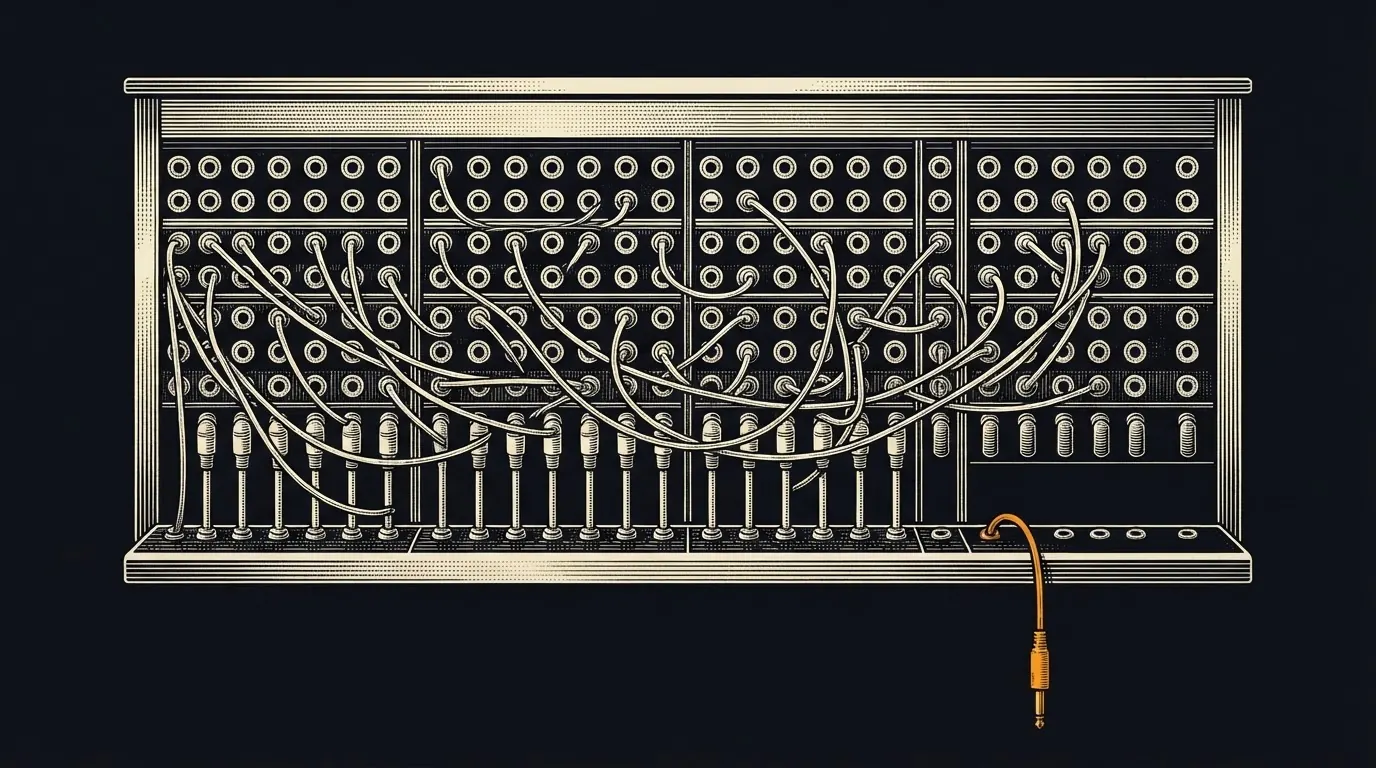
Per SWIFT's own 2024 disclosures, the network connects more than 11,000 financial institutions across over 200 countries and territories[1]. It carries roughly 53 million messages per day. The network is headquartered in Belgium and nominally cooperative, but the United States has significant influence over its membership decisions through the G10 central banks that oversee it.
Being cut off from SWIFT does not strictly prevent international payments, banks can still use telex, email, or regional alternatives (China's CIPS, Russia's SPFS), but it eliminates access to the network that handles most cross-border transactions. For a country that trades globally, SWIFT exclusion is economically equivalent to a trade embargo.
Section 2 · The weaponization timeline
Dollar weaponization did not begin in 2022. It began at least a decade earlier and accelerated at each successive use.
The EU, under pressure from the U.S., ordered SWIFT to disconnect roughly 30 Iranian banks[2]. This was the first use of SWIFT as a sanctions tool against a major economy. Iranian oil exports collapsed. It established that a political decision in Washington or Brussels could cut a country off from the global financial system.
After the Trump administration withdrew from the JCPOA nuclear deal, the U.S. Re-imposed sanctions on Iran over the objections of European allies. SWIFT complied with the U.S. Demands despite Brussels' disapproval. The message: when Washington and Brussels disagree, SWIFT follows Washington.
Following the invasion of Ukraine, the U.S. And EU froze about $300 billion in Russian central bank foreign exchange reserves held at Western financial institutions[3]. Key Russian banks were disconnected from SWIFT. This was the largest and most consequential use of financial sanctions in modern history. Every non-Western central bank took notice.
The U.S. Treasury's OFAC added the Tornado Cash smart contract addresses to the SDN list in August 2022[4]. This was the first time autonomous software code, not a person, company, or country, had been sanctioned. The Fifth Circuit Court of Appeals ruled in November 2024 that immutable smart contracts cannot be designated as "property" under the sanctions statute, partially reversing OFAC's action[5]. Treasury lifted the sanctions in March 2025, but the legal dust is still settling. The precedent of targeting protocol-level software, though, is established.
The Canadian government invoked the Emergencies Act to freeze bank accounts associated with the trucker convoy protests without court orders[6]. This showed that domestic political activity, not only foreign policy, could trigger bank-account freezes in a G7 democracy. A Federal Court then ruled parts of the invocation unconstitutional in 2024, but the precedent remained: bank access is not a civil-liberties guarantee.
After GoFundMe shut down a fundraiser for the same convoy in February 2022, citing terms-of-service violations, organizers raised additional funds through Tallycoin, a Bitcoin-only crowdfunding platform verify×DON'T TRUST, VERIFYClaim: After GoFundMe shut down the convoy fundraiser in February 2022, organizers raised additional funds via the Bitcoin-only Tallycoin platform.Verify at: Reuters: Canadian protesters raise money in Bitcoin after GoFundMe shutdown (Feb 2022) ↗ · tallyco.in ↗ Source 7 in the list belowNews reporting from Reuters and other neutral wire services documents the platform switch and the underlying mechanism.. Tallycoin donations move directly to recipient Bitcoin addresses with no intermediary capable of freezing them.
The framing the site uses, separate from the convoy's politics: the technical property demonstrated is censorship resistance. Whether any specific cause is just is a separate question. The same technology can be used by causes a reader agrees with and causes they don't. A bank can freeze a fundraiser regardless of the cause's merit; a Bitcoin address held by the recipient cannot be frozen by an intermediary.
This is a property of the protocol, not an endorsement of any particular use of it. The Bitcoin holder who values this property accepts that the same property is available to people whose causes they oppose. The choice is between systems where intermediaries can freeze any payment versus systems where they cannot freeze any payment.
Section 3 · Why this matters beyond the specific cases
Before 2022, most central banks treated foreign exchange reserves as neutral financial assets, money held for technical purposes (defending the local currency, settling trade, paying foreign-denominated debt) and not subject to political risk. The Russian reserve freeze permanently broke that assumption.
Every central bank now operates under the working assumption that dollar-denominated reserves can be frozen in a geopolitical dispute. This does not mean they dump dollars, the dollar still dominates because the alternatives are worse. It does mean they diversify. Gold purchases, local-currency settlement arrangements, and quiet discussions of sanctions-resistant reserve assets are the policy response. The dollar's reserve share has fallen from ~72% in 2000 to ~58% in 2024[8]. That trend accelerated after 2022.
The political argument for weaponized sanctions is straightforward: these are tools to punish bad behavior without military action. The structural cost is less visible but real: every use of financial sanctions teaches the rest of the world to reduce its dependence on the sanctioned infrastructure. See The Petrodollar: How Oil Backs the Dollar and Why the Dollar Is the World’s Reserve Currency for how this interacts with dollar dominance.
Section 4 · The response
- Central bank gold buying. Net purchases hit a 55-year high in 2022 and remained elevated through 2024 according to the World Gold Council[9]. Non-Western central banks (China, India, Turkey, Poland, Singapore) are the largest buyers. Gold stored domestically cannot be frozen by a foreign government.
- Alternative settlement systems. BRICS nations have discussed a common payment system. China's CIPS handles yuan-denominated cross-border settlements. Russia and India trade in rupees and rubles. Volumes remain small compared to the dollar market, but the infrastructure is being built.
- Yuan-settled oil. Saudi Arabia has accepted Chinese yuan for some oil shipments to China[10]. Exclusive dollar pricing of oil, the structural basis of the petrodollarPetrodollarDollars that oil exporters earn by selling oil, which is mostly priced in US dollars. The term also names the system built in the mid-1970s, including a 1974 US-Saudi economic commission, in which exporters recycle large sums into US assets like Treasury bonds, adding steady foreign demand for dollars.Full definition system, is no longer absolute.
- Repatriation of gold. Countries that historically stored gold at the Federal Reserve Bank of New York or the Bank of England have quietly begun repatriating. Germany moved 674 tonnes from New York and Paris to Frankfurt between 2013 and 2017[11]. Other countries have followed.
No credible alternative to SWIFT exists today. Dedollarization is real but slow. The dollar remains dominant because alternatives are worse, not because the dollar is trusted. A multipolar reserve world is plausible over decades; a sudden collapse of dollar dominance is not.
Section 5 · Bitcoin's unique property
Bitcoin cannot be sanctioned at the protocol level. This is not a political statement. It is a technical description of how the protocol works.
- No company runs Bitcoin. Tornado Cash the front-end and company could be sanctioned. Bitcoin Core is a reference implementation maintained by independent contributors; there is no legal entity with a signature on the network to target.
- No jurisdiction controls Bitcoin. The network runs on tens of thousands of nodes across every country. Shutting it down would require simultaneous action by every government on Earth.
- Self-custodied Bitcoin cannot be frozen by executive order. A hardware wallet in your possession is not a bank account. No presidential order can seize its contents without physical access to the device and the seed phraseSeed phraseA wallet backup written as a list of words, usually 12 or 24, that can recreate the wallet's private keys. In a single-signature wallet, anyone who sees it can take the bitcoin unless a separate passphrase also protects it. Keep it offline and private; recovery may also need the passphrase and wallet setup details.Full definition.
- Centralized Bitcoin services can be and have been sanctioned. Exchanges, custodians, and ETFExchange-Traded Fund (ETF)A basket of investments (stocks, bonds, or Bitcoin) that trades on a stock exchange like a single share. issuers are jurisdictional and subject to domestic law. Bitcoin held on Coinbase is as freeze-prone as a bank account. Bitcoin held on a Coldcard is not.
This is not an anti-sanctions argument. Whether any particular sanction is justified is a political question. What Bitcoin gives is an asset class that does not depend on the answer, a bearer asset that behaves consistently regardless of which side of a political dispute you are on.
The dollar's reserve status is built on trust that it will behave like a neutral financial asset. Every time it is used as a weapon, that trust erodes. The response is not an immediate exit (alternatives are still worse) but a gradual diversificationdiversificationSpreading investments across different assets so a drop in one doesn't devastate your entire portfolio.Full definition into assets that cannot be frozen remotely. Gold is the old answer. Bitcoin is the new one. Most central banks will hold both over the next decade.
Where to go from here
Sources
Bracketed numbers and verify badges in the text link to these sources. Figures, rates and rules change: check each source’s date before acting on it.
- SWIFT Annual Review 2024 · swift.com. 11,000+ institutions across 200+ countries and territories; ~53 million messages per day. ↩
- Council of the European Union. "Iran: SWIFT disconnection." Council Regulation (EU) No 267/2012 and subsequent amendments · eur-lex.europa.eu. ↩
- U.S. Department of the Treasury. OFAC Russia sanctions program · ofac.treasury.gov. About $300B in Russian central bank reserves frozen at Western institutions; Russian banks cut from SWIFT in March 2022. ↩
- U.S. Treasury Press Release. "Treasury Sanctions Notorious Virtual Currency Mixer Tornado Cash." August 8, 2022 · treasury.gov. First time autonomous smart-contract code was designated on the SDN list. ↩
- Van Loon v. Department of the Treasury, 5th Cir. 2024. Ruling that immutable smart contracts are not "property" under IEEPA. Case documents at Court Listener · courtlistener.com. ↩
- Public Order Emergency Commission (Rouleau Commission). Final report on the Canadian Emergencies Act invocation, February 2023 · publicorderemergencycommission.ca. Federal Court ruling on constitutionality issued January 2024. ↩
- Reuters: Canadian protesters raise money in Bitcoin after GoFundMe shutdown (Feb 2022) ↩
- International Monetary Fund. Currency Composition of Official Foreign Exchange Reserves (COFER) · data.imf.org/cofer. ↩
- World Gold Council. "Gold Demand Trends" quarterly reports · gold.org. Net central-bank purchases hit a 55-year high in 2022, remained above long-run average through 2024. ↩
- Said, S. "Saudi Arabia Considers Accepting Yuan Instead of Dollars for Chinese Oil Sales." The Wall Street Journal, March 15, 2022 · wsj.com. ↩
- Deutsche Bundesbank. "Storage locations of Germany's gold reserves" · bundesbank.de. 674 tonnes repatriated from New York and Paris to Frankfurt, 2013–2017. ↩
- Atlantic Council Sanctions Dashboard · atlanticcouncil.org.
Last updated . Not financial advice. Do your own research. Disclosures · How pages are reviewed