The Cantillon
Effect.
Richard Cantillon, an 18th-century banker, observed that new money doesn't distribute evenly. It reaches some people before others, giving them an advantage before prices adjust. That observation explains more about modern wealth inequality than almost any single idea in economics.
Viewpoint. Besides explaining the topic, this page makes the site’s case on money and Bitcoin. The facts are sourced; that case is the site’s view. How pages are labeled.
This page explains the mechanism: who Cantillon was and how new money reaches banks and asset holders before wages. For the wage-versus-asset gap, see The Wealth Gap; for the social and political effects, see Consequences of Debasement.
New money does not reach everyone at the same moment. The entities closest to its point of creation (large banks, primary dealers, government contractors, asset owners) receive it first and can spend it before prices adjust. By the time the new money has rippled through to groceries, rent, and wages, prices have already risen. Early recipients win. Later recipients absorb the inflationinflationA general increase in prices over time, meaning each dollar buys less than it did before.Full definition. This is not an accident of policy. It is the structural shape of how credit-based money enters an economy.
Who was Cantillon
Richard Cantillon (approximately 1680-1734) was an Irish-French banker and economist who lived through, and profited from, one of the most spectacular monetary bubbles in history: the Mississippi Bubble of 1719-1720 in France. He made a fortune speculating against John Law's scheme and then wrote, in the decade that followed, what many economists consider the first full treatise on economics.
The book is Essai sur la nature du commerce en général, written in French sometime in the 1720s or 1730s and first published posthumously in 1755. It was read widely by Adam Smith and the physiocrats, then largely forgotten until Jevons revived it in 1881.
Cantillon's most durable insight came from watching Law's paper-money inflation. He noticed that when a government or a bank issues new money, it does not appear simultaneously in every pocket. It flows through the economy from specific entry points. The people and industries near those entry points benefit. The people far from them pay the cost.
The mechanism: how new dollars flow
In the modern U.S. dollar system, new money enters through two main doors: commercial bank lending and Federal Reserve open-market operations. Both doors lead to the same short list of first recipients.
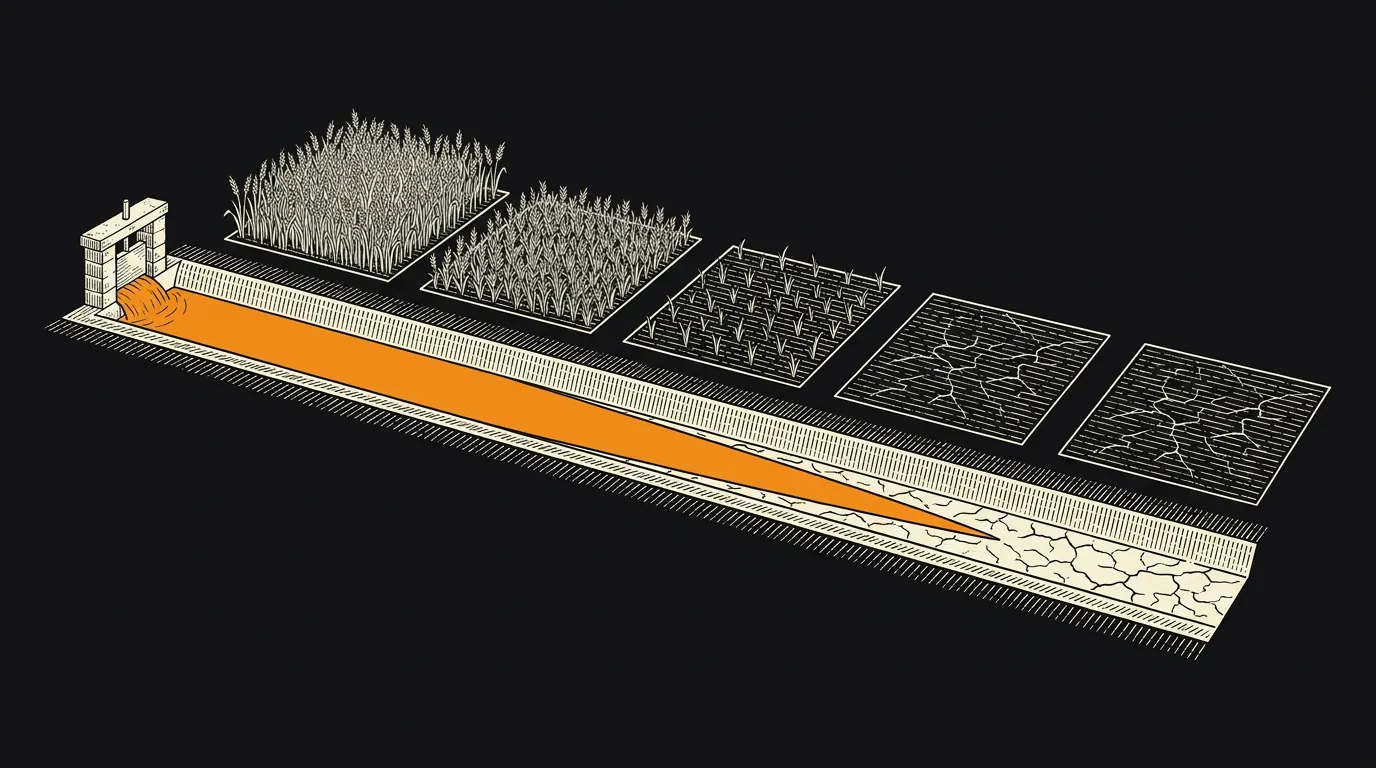
The order of arrival is not a bug. It follows directly from the plumbing. Reserves are credited to primary dealer banks. Treasury payments land in corporate accounts. Asset markets absorb new liquidityliquidityHow quickly and easily you can convert an asset to cash without significantly affecting its price.Full definition within hours. Consumer prices adjust over months and years. The earlier you are in the chain, the more goods you can buy at yesterday's prices.
2020-2022 as a case study
The two years from March 2020 through April 2022 are a near-ideal natural experiment. The Fed expanded its balance sheet by roughly $5 trillion in that window. Congress authorized additional trillions in direct fiscal spending. The numbers below show who won and who lost.
Households that owned their home and held equity through the 2020-2022 window saw six-figure and seven-figure paper gains. The top 10 percent own roughly 90 percent of U.S. stocks, so those gains were highly concentrated.
Renters faced double-digit rent hikes in many cities. Savers in money-market funds earned less than zero in real terms until rate hikes arrived in 2022. First-time home buyers were priced out of the market entirely as prices rose 36 percent against roughly flat real wages.
This is the Cantillon effect in live data. Money was created. It landed first in the accounts of banks, primary dealers, and corporations. It flowed into asset markets. It arrived at consumer prices last. The order decided who was richer and who was poorer at the end of the episode.
Bitcoin and the Cantillon Effect
Bitcoin's issuance is the structural opposite of fiat issuance. New Bitcoin is created only as a reward to miners who solve a proof-of-work puzzle. The schedule is fixed in code: the block subsidyblock subsidyThe new BTC created with each block, paid to the miner who finds it. Started at 50 BTC in 2009, halves every 210,000 blocks. Currently 3.125 BTC after the April 2024 halving. halves every 210,000 blocks, the final Bitcoin will be mined around the year 2140, and the supply ceiling is 21 million coins.
No committee decides who gets newly-issued Bitcoin. No central bank can accelerate or redirect issuance to a favored counterparty. Mining is globally competitive and open to anyone with capital and electricity. There is no privileged first-mover inside a locked room.
"With Bitcoin, there is no Cantillon insider. Every satoshi is earned the same way. That is the monetary property that makes Bitcoin different from every asset that came before it."
Fiatisfake editorial synthesisHolding Bitcoin does not shield you from Cantillon effects in the dollar economy. The rent you pay is still priced in dollars. The groceries you buy are still priced in dollars. But the portion of your savings held in Bitcoin is not being silently diluted by a money-issuance schedule that somebody else controls. Over a long horizon, that is a large difference.
For the companion page on how this inequality shows up in everyday life, see The Wealth Gap.
Where to go from here
Sources
Figures, rates and rules change: check each source’s date before acting on it.
- Cantillon, R. Essai sur la nature du commerce en général (ca. 1730, published 1755) - Mises Institute English edition - mises.org
- Federal Reserve Bank of St. Louis FRED. "Assets: Total Assets (WALCL)" - fred.stlouisfed.org/series/WALCL
- Federal Housing Finance Agency. House Price Index - fhfa.gov/data/hpi
- U.S. Bureau of Labor Statistics. CPI-U historical releases. Peak June 2022 reading - bls.gov/cpi
- Federal Reserve Board. "Distributional Financial Accounts" - household equity ownership by wealth decile - federalreserve.gov/releases/z1/dataviz/dfa/
- S&P Dow Jones Indices. S&P 500 historical levels, March 2020 low to early-2022 peak - spglobal.com
Last updated . Not financial advice. Do your own research. Disclosures · How pages are reviewed