How much of an emergency fund do I need?
Sized to your real risk, not a generic rule.
The 3 to 6 month cushion that keeps a bad month from becoming a bad year: why it exists, how much you need, where to park it, and why $1,000 is the magic first milestone.
3–6 months of essential expenses in a high-yield savings account (4%+ APYAnnual Percentage Yield (APY)An annualized measure of deposit interest that includes the effect of compounding. It is not an inflation-adjusted or after-tax return.Full definition in 2026). Not 3–6 months of income, just rent, food, insurance, and minimum debt payments. A single-income household or freelancer needs the full 6 months. Dual-income with stable jobs can lean toward 3.
- Essential expenses only: rent/mortgage, food, utilities, insurance, minimum debt payments. Not discretionary spending.
- Park it in a HYSA (4%+ in 2026) or FDLXX/SPAXX money market. Not in stocks, not in Bitcoin, this money must be liquid and stable.
- Single income, freelance, or variable income: 6 months. Dual stable income with no dependents: 3 months is defensible.
- The emergency fund is not an investment, it's insurance. Its "return" is the panic you avoid when something breaks.
- Once funded, stop adding to it. Every dollar above 6 months belongs in tax-advantaged accounts.
This page covers personal finance fundamentals that apply regardless of your view on Bitcoin or fiat currencyfiat currencyMoney declared legal tender by a government, not backed by a physical commodity. Its value rests on trust in the issuing government.Full definition.
Where this page mentions accounts or tax rules, they are US examples. Outside the US? The priority order is the same, the account names differ (ISAIndividual Savings Account (ISA)A UK tax-advantaged account where contributions are post-tax but all growth and withdrawals are tax-free.Full definition in the UK, TFSATax-Free Savings Account (TFSA)A Canadian tax-advantaged account where contributions are post-tax but all growth and withdrawals are tax-free.Full definition/RRSPRegistered Retirement Savings Plan (RRSP)A Canadian tax-deferred retirement account; contributions reduce taxable income and growth is tax-deferred until withdrawal.Full definition in Canada, Super in Australia, etc.).
Check before acting. Rates, prices, fees and product terms change often. Confirm the current figures with the provider or the linked source before you act.
Start with $1,000 in a high-yield savings account, before anything else. That handles most common surprise expenses (car repair, urgent care copay, flight home). Then after clearing high-interest debt, build it to cover 3 to 6 months of essential expenses. Keep it boring. It is not an investment. It is insurance against needing to sell investments at a bad time.
On this page
Why an emergency fund exists
The goal is not to earn a return on the cash. The goal is to keep the rest of the plan intact when something goes wrong. A car that needs a new transmission. A job loss. A parent who needs a flight home. A medical deductible that arrives with a broken wrist. These are not catastrophes in a financial plan with a cushion. They are catastrophes in a plan without one.
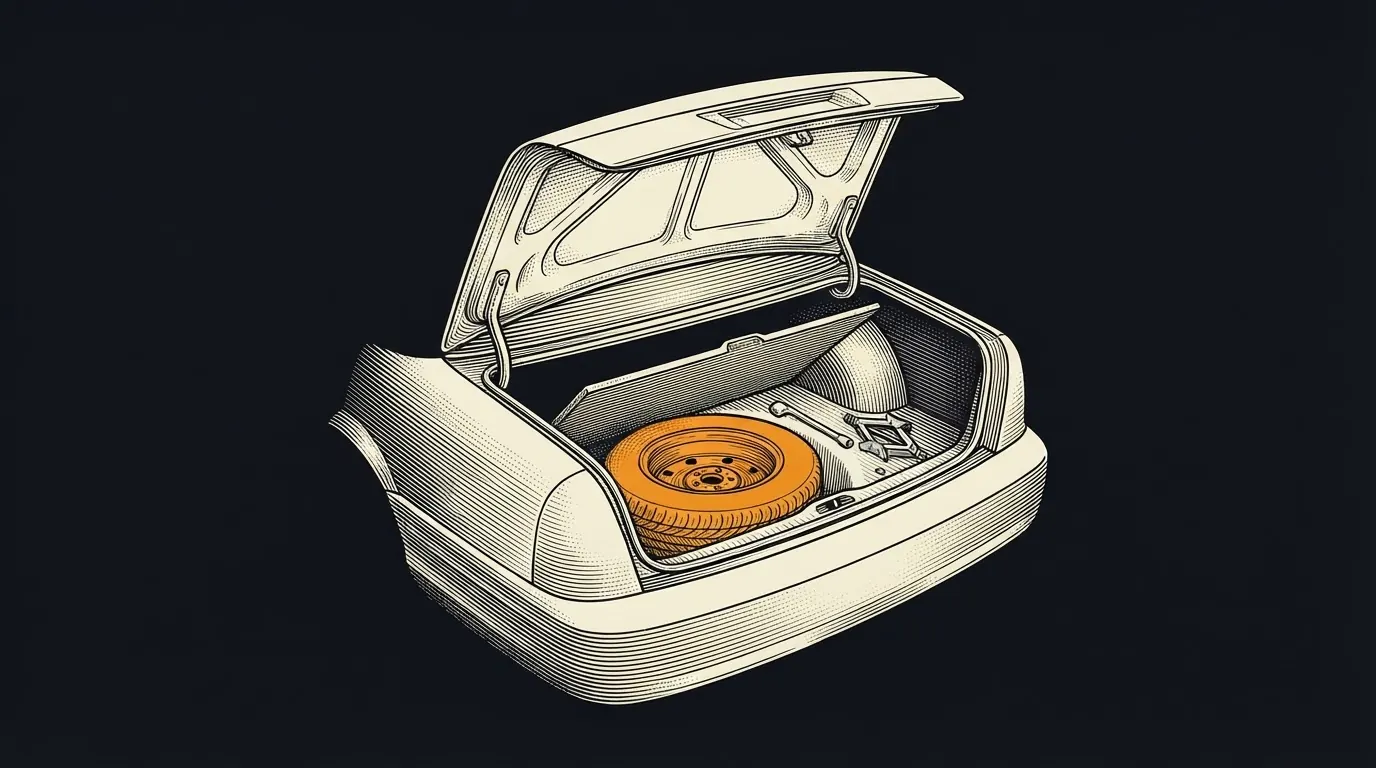
Without an emergency fund, the next surprise expense comes out of a credit card (at 22 percent APRAnnual Percentage Rate (APR)The yearly cost of borrowing money, shown as a percentage.Full definition) or out of investments (sold at whatever the market happens to be doing that week). Both outcomes cost more than the emergency did. The fund's whole purpose is to prevent that forced sale and that credit card balance.
The $1,000 starter fund
Before investing anything, before paying off debt aggressively, before optimizing anything: $1,000 sitting in a savings account. Dave Ramsey made this number famous. The exact figure matters less than the principle: an amount that covers most normal emergencies and breaks the cycle of putting every surprise on a credit card.
If $1,000 seems impossible right now, start with $500. Then $750. The habit of having a buffer matters more than the size of the buffer on day one. Once you have the starter fund, move to step 2 of the order of operations.
Roughly 60 percent of Americans cannot cover a $1,000 emergency with cash. The starter fund is not a lifestyle goal - it is an exit from a statistical trap.
The full 3 to 6 month fund
After clearing high-interest debt, build the starter into a real cushion. Sum your essential monthly expenses (not your full budget): rent or mortgage, food, utilities, insurance premiums, minimum debt payments, transportation, childcare. That number times 3 to 6 is your target.
Essential expenses are usually 60 to 75 percent of take-home pay for most households. So 3 months of essentials is often closer to 2 months of take-home. Do not inflate the target with discretionary spending that would obviously disappear in an actual emergency.
Where to park it
FDICFederal Deposit Insurance Corporation (FDIC)The US agency that insures bank deposits if a bank fails. The standard insurance amount is $250,000 per depositor, per insured bank, for each account ownership category. Since January 1, 1934, no depositor has lost a penny of insured funds as a result of a failure. Bank money market deposit accounts are covered; stocks, bonds, mutual funds (money market funds too) and crypto are not, even when bought at an insured bank.-insured high-yield savings account is the default. A government money-market fund (SPAXX, FDLXX, VMFXX) also works if your cash already sits at a brokerage; it is not FDIC-insured, and where to keep cash sets out the trade-off. Do not invest the emergency fund. Do not put it in a 1-year CD. Do not convert it to Bitcoin. The whole point of the fund is same-day or next-day liquidityliquidityHow quickly and easily you can convert an asset to cash without significantly affecting its price.Full definition at a predictable nominal value.
All four are FDIC-insured to $250,000 per depositor. Rates move roughly with the federal funds rate; check bankrate.com monthly if you are optimizing for yield. The rate difference between the top 4 HYSAs is usually under 0.5 percent; do not switch every month chasing 10 basis points.
How much is right for you
The 3 to 6 month range is a starting point. The actual number depends on factors the range cannot see.
Keep more if you are self-employed with irregular income (see Irregular Income), support dependents on a single income, work in a role with long job-search times, have health conditions with high deductibles, or live in a high-cost region where even a short gap is expensive.
Keep less if you have strong job security (tenured, essential industry), a high-limit HELOC or 0 percent credit card as a backup buffer, a partner with independent stable income, and low fixed costs. Some two-income households with both partners in stable roles run on 2 months plus a credit backstop.
Common mistakes
Stocks drop 30 percent exactly when you get laid off. Bitcoin can drop 70 percent in a bear marketBear marketA long slide in prices, usually defined as a drop of 20% or more from a recent high in a broad market index such as the S&P 500. Bitcoin's four completed cycle bear markets bottomed 77% to 93% below their peaks, and so far it has gone on to new highs after each one.. The point of the fund is availability at a predictable value. A HYSA or a government money-market fund is the correct ceiling.
Christmas is not an emergency. A wedding you knew about 18 months ago is not an emergency. Keep a separate sinking fund for known future expenses. Refill the emergency fund back to target as the first priority after any legitimate draw.
The recommended home for an emergency fund is the Amex HYSA, at a different institution than your checking. No debit card, competitive APY, 1-3 day transfer window to checking. Friction is the feature. See Banking.
Direct product page: americanexpress.com HYSA ↗. No referral link. No commission.
A down payment fund is not your emergency fund. Keep them in separate accounts so you don't accidentally spend the down payment on a car repair, or raid the emergency fund to make the down payment math work. Two distinct purposes, two distinct HYSAs. See Saving for a House for how to run both.
Where to go from here
Sources
Figures, rates and rules change: check each source’s date before acting on it.
- Bankrate Financial Security Index (emergency savings survey) - bankrate.com
- FDIC deposit insurance coverage reference - fdic.gov
- Bankrate high-yield savings rateSavings rateThe share of income you save or invest, usually (income minus spending) divided by income. Saving $1,000 of $5,000 take-home pay is a 20% rate. Whether you use gross or take-home pay, and whether 401(k) contributions and an employer match count, changes the number, so compare rates only on the same definition.Full definition comparison - bankrate.com/banking/savings/rates
- Consumer Financial Protection Bureau - "An Essential Guide to Building an Emergency Fund" - consumerfinance.gov
Last updated . Not financial advice. Do your own research. Disclosures · How pages are reviewed