Running a Bitcoin node.
Verify your own rules.
Running your own Bitcoin node means you verify your own transactions rather than trusting someone else. Here is what a node does, what it takes, what software to use, and why sovereignty is worth it for some users (and unnecessary for others).
Viewpoint. Besides explaining the topic, this page makes the site’s case on money and Bitcoin. The facts are sourced; that case is the site’s view. How pages are labeled.
Not your node, not your rules. When you use a wallet that connects to someone else's node, you are trusting their version of the blockchainBlockchainA public transaction ledger, grouped into blocks that each link to the one before. Every Bitcoin full node checks each block itself and follows the valid chain with the most accumulated proof of work. Recent blocks can occasionally be replaced (a reorganization); the number of computers does not decide validity.Full definition. Running your own node means you verify everything yourself: no trust required. You do not need a node to hold or use Bitcoin. You do need one for maximum privacy, maximum sovereignty, or to run Lightning.
On this page
Section 1 · What a node does
A Bitcoin full node:
- Downloads and stores the complete Bitcoin blockchain (approximately 600GB+ as of 2026) verify×DON'T TRUST, VERIFYClaim: Bitcoin's blockchain is approximately 600GB or larger as of 2026.Verify at: Blockchain.com chain size chart ↗ Source 1 in the list belowChain size grows by approximately 100GB per year. Verify the current size before provisioning storage..
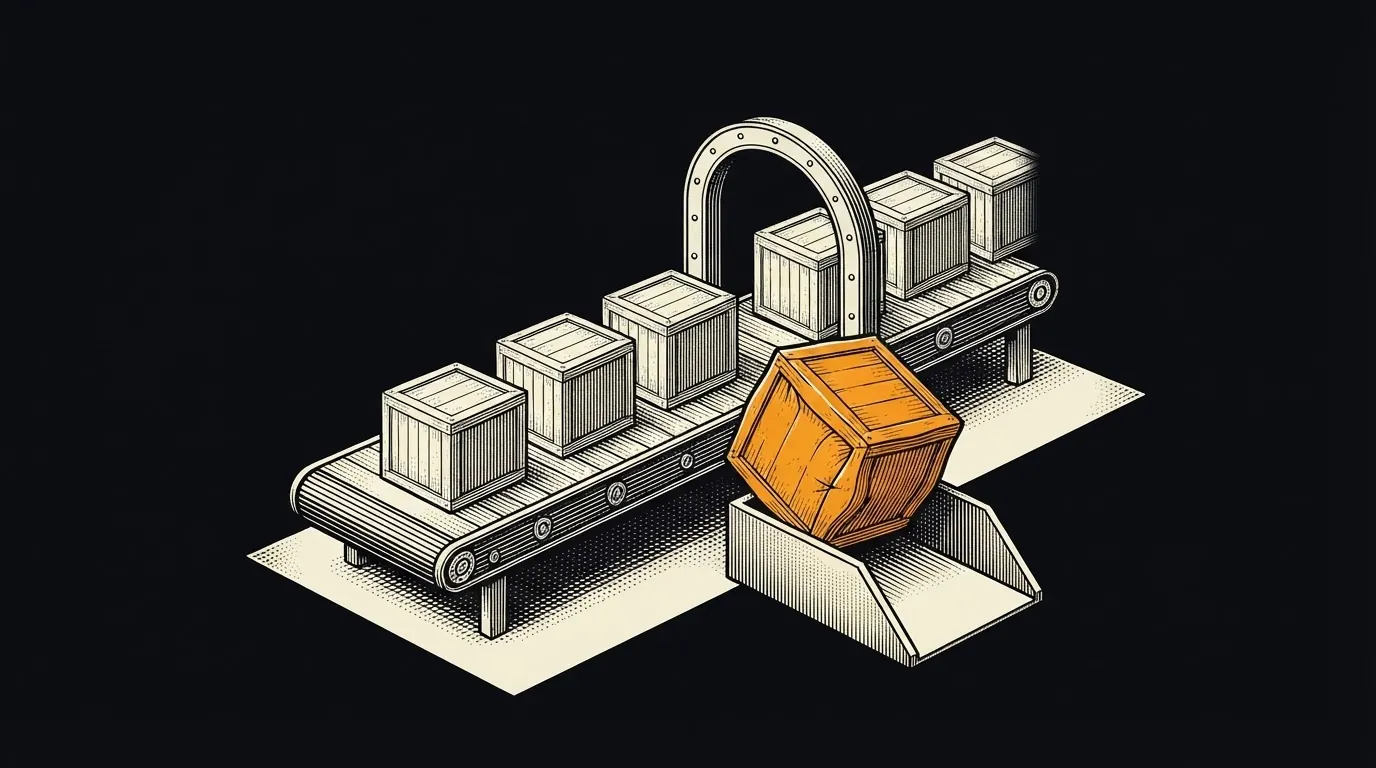
- Independently verifies every transaction and every block against Bitcoin's consensus rules.
- Enforces those rules. It rejects any block that violates them, including any block that tries to create more than 21 million Bitcoin. The 21 million BTCBitcoin (BTC)The ticker symbol for Bitcoin, used on exchanges and in price quotes.Full definition supply limit lives inside the code that every node runs. A node will refuse any block that tries to create more than the allowed subsidy. This is where the cap exists.
- Broadcasts your transactions directly to the network without revealing your IP address to a third party.
- Relays. Forwards valid transactions and blocks to peer nodes, helping the gossip network stay healthy.
- Serves as the foundation for your Lightning node or your Sparrow Wallet connection.
Miners propose blocks. Nodes verify them. Nodes have the final say. If miners somehow published a block that violated the rules, nodes would reject it, and the invalid block would never become part of the chain anyone uses. The more independent nodes, the harder any rule change becomes.
The distinction that matters
Most wallets connect to someone else's node (the wallet provider's). That means you are trusting their node is honest, uncompromised, and online. With your own node you verify everything yourself.
Section 2 · Do you need one
You do not need a node to hold or use Bitcoin. A node is for people who:
- Want maximum privacy. Connecting Sparrow Wallet to your own node means your transaction history is not visible to anyone else.
- Want maximum sovereignty. You verify your own rules rather than trusting a third party.
- Want to run Lightning. A Lightning node requires a Bitcoin node as backend.
- Are technically curious and want to understand how Bitcoin works.
If you just want to hold Bitcoin in a hardware wallet, a node is optional, not required.
Why run a node
A home-run node (a Start9 Server One, Umbrel, or Bitcoin Core on any machine) validates every Bitcoin transaction that flows through the network, keeps a full copy of the blockchain, and lets you check your own balance without trusting any third party. Without your own node, you are trusting someone else's node every time you query a balance or broadcast a transaction.
That sounds academic until you realize the chain of logic: without your own node, your wallet asks someone else for the balance of your addresses. That someone else now knows your addresses, your balance, and your IP address. Across a few years of wallet openings, they have a very complete picture of you.
The sovereignty argument
"Not your node, not your Bitcoin" is slightly too hyperbolic. You can absolutely self-custody without a node. Your hardware wallet still holds the keys, and your coins are still yours on-chainon-chainA Bitcoin payment recorded directly and permanently on Bitcoin's main public ledger, settled by the network itself rather than through a faster off-network lane.Full definition.
But if you care about privacy and do not want to trust Blockstream, mempoolmempoolThe waiting area for Bitcoin transactions that have been broadcast to the network but not yet confirmed in a block.Full definition.space, or a random Electrum operator every time you check your balance, a node is the answer. It is the single largest privacy upgrade most holders can make, and it is a weekend project.
Section 3 · The options
Plug-and-play hardware
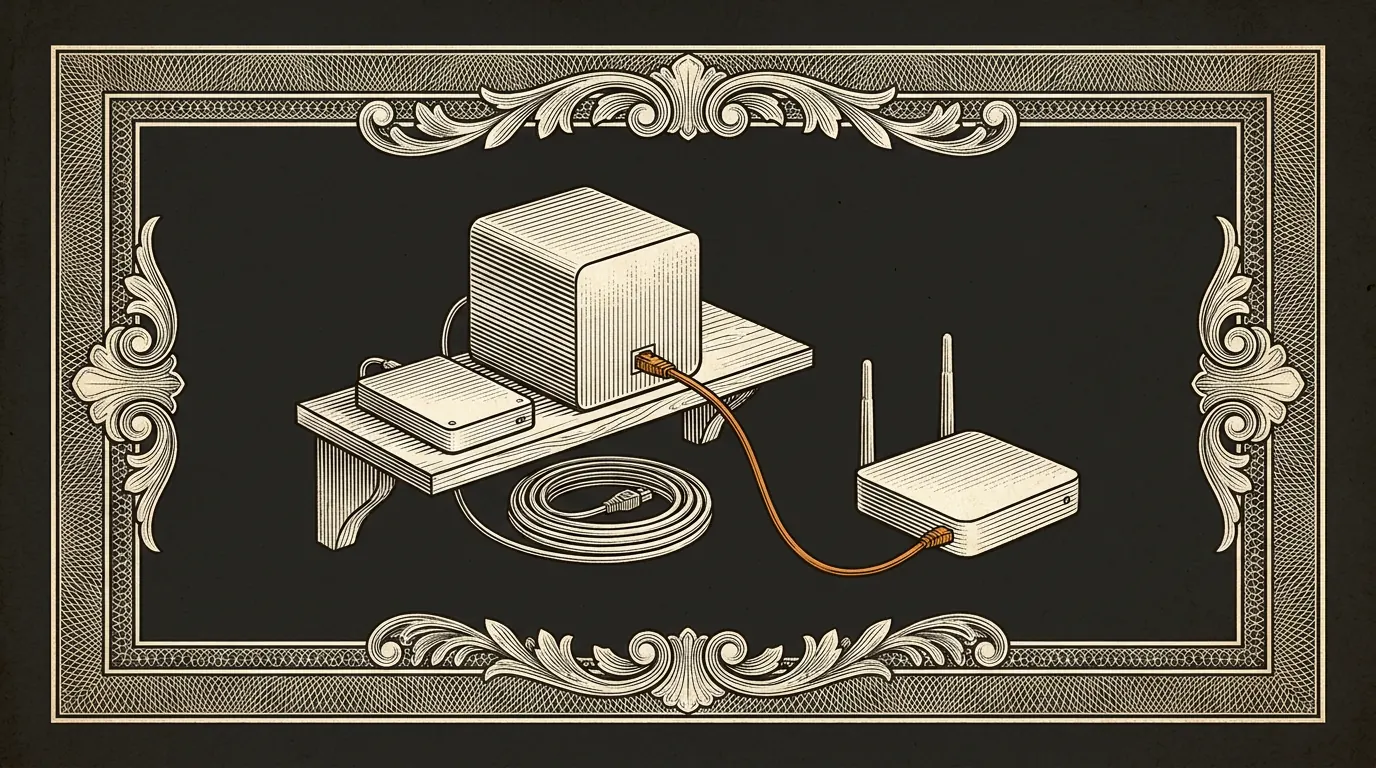
- Start9 Server (start9.com): runs Start9 OS, a self-hosted server operating system designed for sovereignty. Supports Bitcoin Core, Electrum/Fulcrum (for Sparrow), Lightning (Core Lightning or LND), BTCPay Server, and dozens of other apps. Easiest full-sovereign setup for non-technical users verify×DON'T TRUST, VERIFYClaim: Start9 supports Bitcoin Core, Lightning, BTCPay Server, and similar self-hosted apps.Verify at: start9.com ↗ Source 2 in the list belowHardware models and pricing change. Verify current options before ordering.. Hardware cost: approximately $400 to $700 for the Server One, based on a retail purchase in May 2026 (see the Start9 Server One setup walkthrough) verify×DON'T TRUST, VERIFYClaim: Start9 Server One hardware costs approximately $400 to $700 at retail (May 2026).Verify at: start9.com ↗ Source 2 in the list belowHardware models and pricing change. Verify the current price and storage tier before ordering..
- Umbrel (umbrel.com): software that runs on a Raspberry Pi or their own hardware. App-store model for self-hosted services. Lower hardware cost if you already have a Raspberry Pi. Pair with a Raspberry Pi 4 or 5 and a 1 TB SSD. Total hardware cost around $150.
- RaspiBlitz: open-source Bitcoin and Lightning node for Raspberry Pi. More technical setup; for users comfortable with the command line. Lower cost, maximum control.
DIY on existing hardware
Bitcoin Core runs on any modern computer with 1TB+ storage. Free; download Bitcoin Core from bitcoin.org and sync from the genesis blockgenesis blockThe very first batch of Bitcoin transactions, created by Bitcoin's anonymous inventor Satoshi Nakamoto on January 3, 2009. Every Bitcoin transaction since then traces back to it.Full definition. Sync time: 2 to 7 days depending on hardware. The deeper technical guide is at Start9 Server One: first-person setup walkthrough.
Two more DIY paths:
- Raw Bitcoin Core on an old laptop: Free software, hardware you already own. Cheapest path. More command-line work, and your old laptop has to stay on most of the time. Good for the tinkerer who wants maximum control.
- Raspberry Pi running Bitcoin Core directly: Minimalist version of the Umbrel path. Skip Umbrel. Around $100 plus a 1 TB SSD. You manage Bitcoin Core configuration by hand. Not recommended as a first node, but a clean setup once you know what you are doing.
Initial sync
Downloading and verifying the entire blockchain takes 2 to 7 days depending on your hardware, SSD speed, and connection. This is a one-time cost. After that, keeping up with new blocks is trivial.
Ongoing operating cost is minimal: roughly 20 GB of downloads per month, plus 200 GB or more of uploads if you relay to peers, and around 20 watts of electricity. That is less than a single incandescent lightbulb running 24/7.
Section 4 · Connecting your wallet to your node
Sparrow Wallet + Electrum server
Your node needs an Electrum server (Fulcrum or electrs) alongside Bitcoin Core. Sparrow Wallet connects to this server via local network or Tor onion address. Result: Sparrow shows your wallet balance and history without revealing your addresses to anyone else.
Connecting Sparrow Wallet to your node
The alternative to an Electrum server is connecting Sparrow straight to Bitcoin Core. This is the practical payoff. In Sparrow, open Settings and then the Bitcoin Core section. Add your node's IP address and RPC credentials (on Start9 these live inside the Bitcoin Core app page, on Umbrel inside Connect Wallet).
Once connected, every Sparrow query hits your node, not a random Electrum server. Your balance, your transaction history, your address gap limit, all of it is calculated locally. Your wallet leaks nothing to third parties.
Broadcasting a transaction also goes through your node. The transaction enters the peer-to-peer network at your node first, which removes a small but real leakage vector.
Mobile wallet + your node
Bitcoin Wallet (Electrum-based) or Zeus can connect to your node remotely via Tor. More complex setup but maximum privacy on mobile.
What you gain
Without a personal node, Sparrow defaults to Blockstream's public Electrum servers to query balances. Every time you open your wallet, that server operator can see your addresses. Reputable companies run those servers, but it is still an avoidable leak. A personal node does that lookup locally. The privacy delta is huge.
The second gain is independence. If a public Electrum server goes down, a wallet depending on it stops working. A wallet depending on your own hardware does not. Nobody can deplatform you out of your own stack.
Section 5 · What running a node is not
- Mining Bitcoin. Nodes verify, miners create new blocks. Completely different functions. See Home Mining.
- Earning Bitcoin. Nodes are not compensated. Running one is a service to yourself and the network.
- Storing Bitcoin. Your keys are separate from your node. Keys live on the hardware wallet; the node is verification software.
- It does not make your transactions cheaper or faster. On-chain fees depend on the mempool, not your node.
- It does not by itself give you Lightning. Lightning is a layer-2 that runs on top of Bitcoin and needs additional software.
Section 6 · What 50% household adoption would do
Most node-running essays end at "you should." Here is a different framing: not should, but what would happen if half of US households did. The thought experiment is not a prediction. It is a way to calibrate what node and home-mining adoption can change about Bitcoin's structural properties at a given scale.
There are approximately 133 million US households (132.7 million, 2024 ACS 1-year estimate) verify×DON'T TRUST, VERIFYClaim: US household count is approximately 133 million (132.7 million) per the 2024 ACS 1-year estimate.Verify at: Census S1101: Households and Families, 2024 ACS 1-Year Estimates ↗ Source 3 in the list belowCensus updates the household count annually; verify against current ACS release.. 50% adoption means ~66 million household nodes running concurrently in the US alone.
What that changes about the reachable-node count
Global reachable Bitcoin nodes today number roughly 20,000, per Bitnodes' real-time crawl verify×DON'T TRUST, VERIFYClaim: Reachable Bitcoin nodes number approximately 20,000 globally.Verify at: bitnodes.io ↗ Source 4 in the list belowLive crawler. Count fluctuates daily. Bitnodes measures publicly reachable nodes; the actual full-node count is higher (many run behind Tor or non-listening).. Going from 20,000 to ~66,000,000 is a ~3,300× increase. Sybil attacks against the gossip layer become economically meaningless at that density. Eclipse attacks against a specific household node remain possible, but their value collapses because the same user can verify their balance against any of 66 million independent peers.
What that changes about hashrate concentration
If all of those household nodes also ran a Bitaxe-class home miner (~1.5 TH/s each), the aggregated hashratehashrateThe total computational power a miner or the entire Bitcoin network applies to finding blocks, measured in hashes per second. More hashrate means more security but also more competition for block rewards.Full definition would be approximately 100 EH/s, roughly 10.7% of current global network hashrate (~926 EH/s, 7-day average to September 24, 2026) verify×DON'T TRUST, VERIFYClaim: Global Bitcoin network hashrate is approximately 926 EH/s (7-day average to September 24, 2026).Verify at: Blockchain.com hashrate chart ↗ · mempool.space ↗ Source 5 in the list belowLive data; verify against current readings.. Foundry USA and AntPool, which together currently account for roughly half of mined blocks, would drop from a combined ~50% to approximately 45% in this scenario.
That is not the same as solving mining centralization. It does materially reduce the marginal threat: a coordinated attack between the top two pools no longer crosses the 51% threshold without simultaneously corrupting tens of millions of independent home miners.
What that changes about regulatory exposure
66 million US households running nodes is, in voting terms, roughly 130 million adults with direct skin in the game (US households average about 1.95 adults, 2024 ACS)[6]. That is structurally different from "5% of households hold an ETFExchange-Traded Fund (ETF)A basket of investments (stocks, bonds, or Bitcoin) that trades on a stock exchange like a single share.." A ban that confiscates self-custodied BTCBitcoin (BTC)The ticker symbol for Bitcoin, used on exchanges and in price quotes.Full definition, criminalizes node-running, or seizes mining hardware would touch roughly half of all US adults[7]. Whatever you believe about the political risks to Bitcoin, the size of the affected constituency at 50% household adoption makes a US-specific ban politically untouchable in a way that 2026's ~14–21% crypto-ownership rate does not.
What that changes about the grid (almost nothing)
Bitaxe Supra hashes at ~600 GH/s on ~15 watts; a Bitaxe Duo or stacked board roughly doubles that to ~1.2 TH/s on ~25 W. ~66 million units running at ~25 W draws ~1.66 GW continuous. US grid load is approximately 460 GW on average, with summer demand around 700 GW peak verify×DON'T TRUST, VERIFYClaim: US grid total generating capacity is approximately 1,300 GW with average load around 450–500 GW.Verify at: EIA electricity statistics ↗ Source 8 in the list belowEIA publishes nameplate and load statistics. Nameplate capacity is approximately 1,300 GW; peak load varies seasonally; cross-check against the latest EIA Form 860 / 861.. The 1.66 GW of additional draw is approximately 0.36% of total US generation. Trivial.
Frame this as "what 50% adoption does," not "this will happen." The numbers tell you whether the sovereignty story has scaling room, not whether the sociology gets there. See home mining for the actual hardware side, the Bitaxe Gamma Duo review for representative current hardware specs, and can the government ban Bitcoin for the political-economy version of this argument.
Where to go from here
Sources
Bracketed numbers and verify badges in the text link to these sources. Figures, rates and rules change: check each source’s date before acting on it.
- Blockchain.com, Blockchain.com chain size chart ↩
- Start9 · start9.com. ↩
- U.S. Census Bureau, S1101: Households and Families, 2024 American Community Survey 1-Year Estimates (United States) ↩
- Bitnodes — Bitcoin node network data and trends ↩
- Blockchain.com, Blockchain.com hashrate chart ↩
- U.S. Census Bureau, B09021: Living Arrangements of Adults 18 Years and Over by Age, 2024 American Community Survey 1-Year Estimates (United States) ↩
- U.S. Census Bureau, S0101: Age and Sex, 2024 American Community Survey 1-Year Estimates (United States) ↩
- EIA electricity statistics ↩
- Bitcoin Core. Project page and downloads · bitcoin.org/en/download.
- Umbrel · umbrel.com.
- RaspiBlitz · github.com/rootzoll/raspiblitz.
- Sparrow Wallet · sparrowwallet.com.
- Start9 Labs documentation · docs.start9.com.
- Bitcoin Core documentation · bitcoincore.org.
- Blockchain size statistics · blockchair.com.
- Sparrow Wallet server connection docs · sparrowwallet.com.
Last updated . Educational content, not financial advice. Disclosures · How pages are reviewed