What are your rights when a debt collector contacts you?
The FDCPA is on your side.
A collector calling about an old debt is counting on you not knowing the rules. The Fair Debt Collection Practices Act, a federal law from 1977, gives you specific, enforceable rights: to demand written proof, to control when and how they contact you, and to shut off communication entirely. Knowing them changes who has leverage.
You can make them prove it, and make them stop: under the FDCPA, request validation in writing within 30 days and collection must pause until they verify the debt. No calls before 8am or after 9pm. A written "cease communication" letter stops contact. A court judgment is required before a private collector garnishes your wages.
- The FDCPA (1977) governs third-party collectors, not the original creditor collecting its own debt. Verify who is calling you.
- You have 30 days from receiving the collector's validation notice to demand written validation; do it and they must stop collecting until they send proof.
- Collectors cannot call before 8:00am or after 9:00pm your local time, and must stop calling your workplace once you tell them your employer prohibits it.
- Most consumer debts are time-barred after a state statute of limitations of roughly 3 to 6 years; making a payment or even acknowledging the debt can restart that clock to 0.
- Wage garnishment requires a court judgment first; a collector who threatens to garnish your paycheck "today" over the phone is bluffing or breaking the law.
This page covers personal finance fundamentals that apply regardless of your view on Bitcoin or fiat currencyfiat currencyMoney declared legal tender by a government, not backed by a physical commodity. Its value rests on trust in the issuing government.Full definition.
A debt collector has to follow rules; you do not have to take their word for anything. Within 30 days you can force them to send written proof the debt is yours and correct. You can dictate the hours and channels they use, and you can end contact with one letter. If a debt is old enough to be past your state's statute of limitations, a single payment can wake it back up, so never pay or "agree to" a time-barred debt before you understand the date. And nobody takes money from your paycheck without first taking you to court.
What can a collector do, and what is off-limits?
The FDCPA draws a sharp line between routine collection and prohibited conduct. Here is the practical map.
| SITUATION | ALLOWED | PROHIBITED (FDCPA VIOLATION) |
|---|---|---|
| When they call | Between 8:00am and 9:00pm your local time. | Calls before 8am or after 9pm; calling after you tell them a time or place is inconvenient (FTC / FDCPA §805). |
| Calling you at work | Contacting you at work if they do not know your employer bans it. | Continuing to call your workplace after you say your employer prohibits such calls. |
| Talking to others | Contacting a third party once to get your address or phone number. | Telling your family, neighbors, or employer that you owe a debt. |
| Language & conduct | Stating the amount owed and asking for payment. | Threats of violence, obscene language, or repeated calls meant to annoy or harass. |
| What they can claim | Accurately describing the debt and lawful next steps they intend to take. | Pretending to be a lawyer or government agent, threatening arrest, or threatening a lawsuit they will not file. |
| Taking your money | Asking you to pay voluntarily. | Garnishing wages or freezing a bank account without first winning a court judgment. |
| After a "stop" letter | One final notice telling you collection is ending or that they will sue. | Any further contact once you send a written cease-communication request. |
The FDCPA is federal law and stable; some states add stronger protections. The 8am–9pm window and third-party rules are as of 2026.
How do you make a collector prove the debt is yours?
This is your strongest early move, and it costs nothing but a stamp. Within 5 days of first contacting you, a collector must send a written validation notice stating the amount, the creditor, and your right to dispute (FDCPA §809). You then have 30 days to dispute it in writing.
Send a short debt-validation letter demanding they verify the debt: the original creditor, the amount, and proof they have the right to collect it. Once you dispute in writing within that 30-day window, the collector must cease collection until it mails you verification verify×DON'T TRUST, VERIFYClaim: If you dispute a debt in writing within 30 days of the validation notice, the collector must stop collecting until it sends written verification.Verify at: CFPB: Debt Collection ↗The CFPB's debt-collection hub explains the validation notice, the 30-day dispute window, and the collector's duty to pause collection until it verifies.. If they cannot verify it, they are supposed to stop, and many thin-documentation zombie debts die right here.
If the debt was opened by an identity thief rather than you, pair the validation letter with an FTC Identity Theft Report; the identity theft response runbook covers the full sequence.
Send validation and cease-communication letters by mail with tracking or a certificate of mailing, and keep a copy. A phone call leaves no record; a dated letter you can prove you sent is what protects you if the collector violates the law later. Log every call: date, time, name, and what was said.
The CFPB publishes free sample letters you can adapt, including a validation-request letter and a stop-contact letter, at its debt collection resource center. There is no reason to pay anyone for these templates.
Can you legally make a collector stop contacting you?
Yes. Send a written request telling the collector to cease communication, and under FDCPA §805(c) they must stop contacting you, with only two narrow exceptions: one message confirming they will stop, and one telling you they intend to pursue a specific remedy such as a lawsuit verify×DON'T TRUST, VERIFYClaim: A written cease-communication request forces a collector to stop contacting you, except to confirm they are stopping or to state they intend to invoke a specific remedy like suing.Verify at: FTC: Fair Debt Collection Practices Act text, §805(c) ↗The statutory text of §805(c) lists the cease-communication right and its two exceptions verbatim..
Understand what this does and does not do. It stops the phone calls and letters. It does not erase the debt, and it can push a collector to sue sooner because talking is no longer an option. Use it when the debt is not valid, is past the statute of limitations, or the contact has become harassment, not as a way to dodge a debt you owe and can pay.
The 2021 CFPB rule (Regulation F) also lets you specify preferred contact channels and times, and generally limits a collector to 7 calls in 7 days per debt before it presumes harassment. If you are drowning across several debts, start with the debt payoff order and, if you are in crisis, the help-now triage page.
What is the statute of limitations, and the re-aging trap?
Every state sets a statute of limitations on how long a creditor can sue you to collect a debt, commonly 3 to 6 years for credit-card and other consumer debt, though a few states run longer. Once that window closes, the debt is "time-barred": you may still owe it morally, but a court can no longer force you to pay if you raise the statute as a defense.
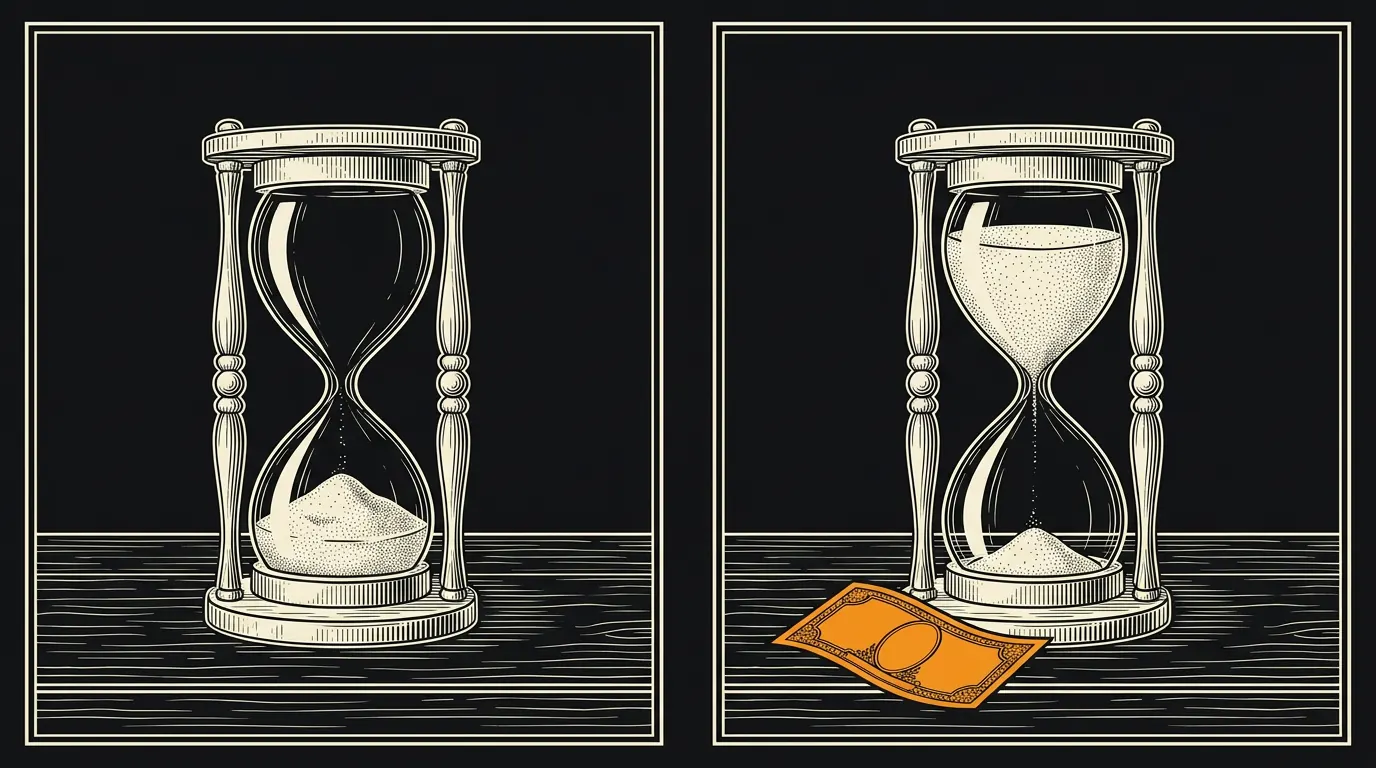
Here is the trap. In many states, making a payment, or sometimes even acknowledging in writing that the debt is yours, restarts the clock to 0, reviving a debt that was already dead. This is called re-aging, and collectors of old "zombie debt" bank on it: they offer a small "settlement," you send $50, and a debt you never had to pay is now fully enforceable again verify×DON'T TRUST, VERIFYClaim: On time-barred debt, making a payment or acknowledging the debt can restart the statute of limitations, and collectors may not sue or threaten to sue on a debt they know is time-barred.Verify at: CFPB: Debt Collection (time-barred debt) ↗The CFPB explains that partial payment can restart the limitations clock in many states and that suing or threatening suit on knowingly time-barred debt can violate the FDCPA..
Find the date of last activity (last payment or last time you used the account) and check your state's limitations period. If the debt is time-barred, do not pay, promise to pay, or admit it is yours in writing until you decide deliberately. One $50 payment can convert an unenforceable debt back into one that can be sued on for another 3–6 years.
Separately, most negative debts drop off your credit report after 7 years under the Fair Credit Reporting Act regardless of the statute of limitations, so the two clocks are different. Rebuilding after that is covered on the credit building page.
Can a collector garnish your wages or drain your bank account?
Not on a phone call. For most consumer debts, a collector must first sue you and win a court judgment before it can garnish wages or levy a bank account. A caller threatening to garnish your paycheck "by Friday" over the phone is either bluffing or, if they know no judgment exists, making a false threat that itself violates the FDCPA.
If a collector does sue, show up. Missing the hearing hands them a default judgment, which is how most garnishments happen, not because the debt was airtight but because nobody appeared to contest it. Even with a judgment, federal law caps how much of your wages can be taken, generally the lesser of 25% of disposable earnings or the amount above 30x the federal minimum wage, and certain income like Social Security is largely protected.
A few debts do bypass the court-judgment step, notably federal student loans, unpaid federal taxes, and child support, which can be collected through administrative garnishment. Those are the exceptions, not the rule for a credit-card or medical collector calling you.
How do you report a collector that breaks the law?
Three channels, and using them is free. File a complaint with the CFPB at consumerfinance.gov, which routes it to the company and typically requires a response within about 15 days. Report to the FTC at reportfraud.ftc.gov, which feeds a database law enforcement uses. And file with your state attorney general, since many states have their own debt-collection laws that are stronger than the FDCPA.
You can also sue. The FDCPA lets you recover actual damages plus up to $1,000 in statutory damages per lawsuit, and if you win, the collector generally pays your reasonable attorney's fees, which is why many consumer attorneys take these cases at no upfront cost to you. This is exactly why your call log and mailed letters matter: documented violations are what make a case.
If the calls, threats, and back-payment demands have you in genuine financial crisis, work the help-now page first to stabilize, then rebuild your footing with the financial security framework so this does not recur.
No collector, law firm, credit-repair company, or anyone else pays this site. See /how-this-site-makes-money/.
Related
- CFPB: Debt Collection · consumerfinance.gov
- FTC: Fair Debt Collection Practices Act text, §805(c) · ftc.gov
Last updated 2026-09-25. Not financial advice. The FDCPA is federal law; state protections and statutes of limitations vary, verify before relying on them.