Does this site apply if you are outside the US?
The framework does. The account names do not.
Mostly yes. The math of money is the same everywhere: spend less than you earn, hold a cash buffer, kill expensive debt, own broad low-cost index funds, and understand that fiat is designed to lose value. What does not travel is the plumbing: Roth IRAIndividual Retirement Account (IRA)A retirement account with tax advantages and eligibility rules. Traditional IRA contributions may be deductible; taxable withdrawals generally enter income. Roth contributions use after-tax money, and qualified Roth withdrawals are tax-free.Full definition, 401(k), HSAHealth Savings Account (HSA)A health savings account available only when eligibility requirements are met. Federal tax benefits depend on contribution limits and qualified medical expenses. Health coverage, other coverage and Medicare enrollment can affect eligibility; state tax treatment can differ.Full definition, 529, US tax brackets, Social Security, and FDICFederal Deposit Insurance Corporation (FDIC)The US agency that insures bank deposits up to $250,000 per depositor if a bank fails. insurance are US-only. Keep the logic, swap the account names for your country's versions, and get local tax advice for anything specific.
The framework is universal; the specifics are US-centric. Budgeting, the emergency fund, debt payoff order, index investing, the debasement thesis, Bitcoin and self-custody all work in any country. Stop trusting the specifics the moment they name a US account or a US tax rule; those need a local translation.
- Roughly 90% of what this site argues (the behavior and the math) is country-agnostic. The US-specific layer is account types and tax law, maybe 10% of the content, but it is load-bearing when it appears.
- Bitcoin and self-custody are byte-for-byte identical worldwide. A seed phraseseed phraseA sensitive wallet backup represented by words. Recovery may also require a passphrase and wallet configuration. A mnemonic can derive many private keys; it is not one individual key. Keep it private and use only the verified recovery procedure for the wallet you own.Full definition and a Sparrow wallet work the same in Lagos, London, or Louisiana. Your local tax and reporting rules differ, but the protocol does not.
- Tax-advantaged accounts translate directionally: US Roth IRA is roughly a UK ISAIndividual Savings Account (ISA)A UK tax-advantaged account where contributions are post-tax but all growth and withdrawals are tax-free.Full definition, Canadian TFSATax-Free Savings Account (TFSA)A Canadian tax-advantaged account where contributions are post-tax but all growth and withdrawals are tax-free.Full definition, or Australian post-tax super contribution. These are analogs, not exact legal equivalents.
- FDIC bank insurance ($250,000 per depositor) is US-only. Most developed countries have their own scheme (UK FSCS £120,000, Canada CDIC C$100,000, EU deposit guarantee €100,000), but the limits and rules differ.
- Anything naming the IRS, Social Security, Medicare, SSI, federal tax brackets, or a Section-number account (401(k), 529, HSA) is US law. Do not port those figures to your country. Find your local equivalent and confirm current rules.
This page covers personal finance fundamentals that apply regardless of your view on Bitcoin or fiat currencyfiat currencyMoney declared legal tender by a government, not backed by a physical commodity. Its value rests on trust in the issuing government.Full definition.
This site is written for a US reader, so the account names and tax numbers are American. But the reasoning underneath is not. Spending less than you earn, holding a few months of cash, paying off high-interest debt before you invest, and buying broad low-cost index funds are true in every currency. The fiat-debasement argument is global by definition: every fiat currency inflates. Bitcoin and self-custody work identically anywhere with an internet connection. So use the framework, ignore "Roth IRA" and "401(k)" and "529" as literal instructions, look up your country's version of each, and get a local tax professional for the specifics this site cannot give you.
What actually carries over everywhere?
Almost all of it. The parts of personal finance that matter most are behavioral and mathematical, and neither behavior nor math cares about your passport. Concretely, these are country-agnostic:
- Spend less than you earn. A positive gap between income and spending is the entire engine of wealth. No account structure creates it for you.
- Hold a cash emergency fund. Three to six months of expenses in cash, in your own currency, so a surprise does not force you to sell assets or borrow at a bad rate. See the emergency-fund calculator.
- Kill high-interest debt first. A 22% credit-card rate is a guaranteed 22% loss whether you carry it in dollars, pounds, or rand. Paying it off beats almost any investment.
- Buy broad, low-cost index funds. The case for owning the whole market cheaply instead of picking stocks or paying an active manager holds in every market. See index funds.
- Follow the order-of-operations logic. Buffer first, then any employer matchemployer matchAn employer contribution linked to qualifying employee contributions under a plan formula. Eligibility, vesting and plan terms determine what you receive and keep. The match ratio is not an annual investment return, and the invested balance can fall.Full definition, then expensive debt, then long-term investing. The sequence is a priority ranking, not a US rule. See the money order of operations.
- The fiat-debasement thesis. Every fiat currency is designed to lose purchasing powerpurchasing powerWhat a dollar can buy, not what the dollar number says. A 1971 dollar bought a gallon of gas. Today's dollar buys roughly a third of one. Same dollar, much less buying ability.Full definition over time. This is global by construction, not an American quirk. See the problem.
- Bitcoin and self-custody. The protocol, the 21-million cap, and holding your own keys are identical worldwide. See Bitcoin for beginners.
If you strip out the American account names, what remains is a complete financial framework that works in any country. That framework is the point of this site. The US packaging is just the vehicle.
What is US-only and has to be translated?
A specific layer of this site is pure US law, and none of it maps cleanly to your country by name. When you hit these, stop reading them as instructions and start reading them as "find my local version of this."
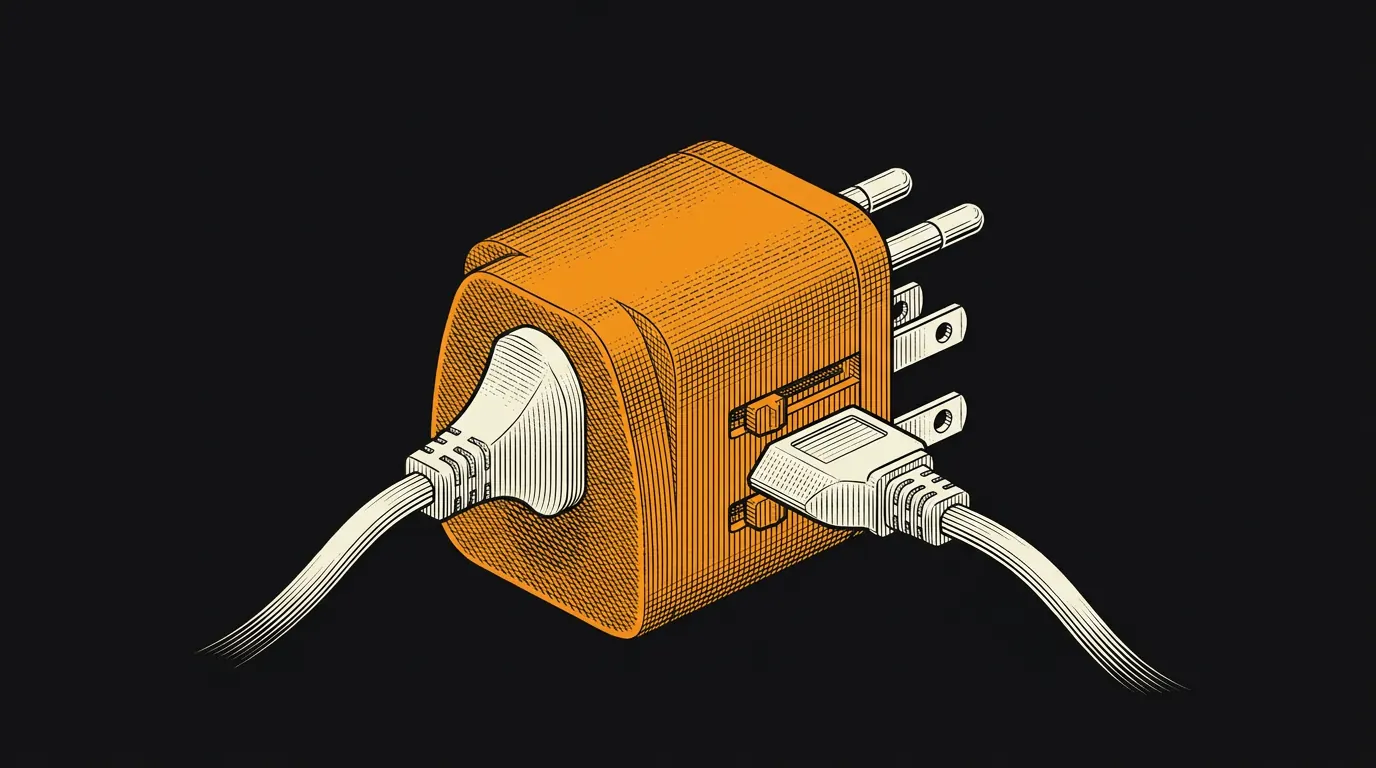
- Specific account types. Roth IRA, Traditional IRA, 401(k), HSA, and 529 are creations of the US tax code. The concept (a tax-sheltered wrapper) exists elsewhere, but the contribution limits, withdrawal rules, and tax treatment are American and do not transfer.
- US federal and state tax rules. Federal brackets, long-term capital-gains rates, state income tax, and the entire IRS apparatus are US-specific. Your country has its own brackets, its own capital-gains regime, and its own rules on what is even taxable.
- Social Security, Medicare, SSI. These are US federal programs. Your country's state pension, national health system, and disability benefits work differently and follow different eligibility math.
- FDIC insurance. The $250,000-per-depositor bank guarantee is a US institution. Other countries have their own deposit-insurance schemes at different limits.
- IRS-specific tools and forms. Any calculator or figure keyed to a US form, filing status, or federal threshold is not portable. Treat the dollar amounts as illustrative, not as your numbers.
When a page names a US account or a US tax figure, do not copy the number. Copy the role it plays. "Max your Roth IRA" means "use your country's best tax-free growth wrapper up to its limit." Translate the role, then look up your local limit.
FDIC is a clean example of US-only machinery with a foreign analog. In the US, deposits are insured to at least $250,000 per depositor, per insured bank verify×DON'T TRUST, VERIFYClaim: US bank deposits are insured to at least $250,000 per depositor, per FDIC-insured bank, and this is a US-only scheme.Verify at: FDIC: Deposit Insurance ↗The FDIC's own page states the $250,000 coverage limit and that it applies to US FDIC-insured banks.. The UK, Canada, and the EU each run their own version at their own limit. Same idea, different agency, different number.
What is my country's version of a Roth IRA or 401(k)?
Here is a directional map of the most common US tax-advantaged accounts to their rough analogs in a few English-speaking countries. Read this as approximate, not as legal equivalence: the wrappers rhyme, but contribution limits, access ages, and tax mechanics differ in every case. Use it to know what to search for, then confirm the current rules locally.
| US ACCOUNT (ROLE) | UK (APPROX) | CANADA (APPROX) | AUSTRALIA (APPROX) |
|---|---|---|---|
| Roth IRA Post-tax in, tax-free growth and withdrawal |
Stocks & Shares ISA (or Lifetime ISA) | TFSA (Tax-Free Savings Account) | Super, post-tax (non-concessional) contributions |
| 401(k) / Traditional IRA Pre-tax in, taxed on withdrawal, often employer-linked |
Workplace pension or SIPP | RRSPRegistered Retirement Savings Plan (RRSP)A Canadian tax-deferred retirement account; contributions reduce taxable income and growth is tax-deferred until withdrawal.Full definition (Registered Retirement Savings Plan) | Superannuation (employer + concessional contributions) |
| 529 plan Tax-advantaged education savings |
Junior ISA | RESP (Registered Education Savings Plan) | No direct wrapper; general investment or an education bond |
| Taxable brokerage Ordinary investment account, no shelter |
General Investment Account | Non-registered account | Ordinary brokerage account |
The three tax-free-growth wrappers in the top row are the closest match to a Roth IRA, but each has its own rules. The UK ISA shelters investment growth and withdrawals with an annual allowance set by HMRC verify×DON'T TRUST, VERIFYClaim: A UK ISA lets you save and invest with tax-free growth and withdrawals, subject to an annual allowance.Verify at: GOV.UK: Individual Savings Accounts (ISAs) ↗GOV.UK's ISA overview describes the tax-free treatment and the annual allowance directly.. The Canadian TFSA is a registered account that holds investments and grows tax-free, with contribution room that carries forward verify×DON'T TRUST, VERIFYClaim: The Canadian TFSA is a registered account that holds investments and generates tax-free income.Verify at: Canada.ca: Tax-Free Savings Account (TFSA) ↗The CRA's TFSA hub confirms it is a registered account holding investments that generate tax-free income.. Australian superannuation is primarily a compulsory employer-funded retirement system, closer to a 401(k) in spirit, though post-tax contributions give it a Roth-like corner verify×DON'T TRUST, VERIFYClaim: Australian superannuation is a retirement savings system funded largely by compulsory employer contributions.Verify at: Moneysmart (ASIC): How super works ↗ASIC's Moneysmart explains super as retirement savings built largely from compulsory employer contributions..
The honest caveat: these are not one-to-one. An ISA is not a Roth IRA, it just plays a similar role. Super is not a 401(k), even though both are retirement wrappers. Use the table to find the right thing to research in your country, never to assume the rules match.
This site has dedicated translation guides for several countries, each mapping the full framework to local accounts and tax rules:
Where does the tax guidance stop for a non-US reader?
At the border. This site can give you the universal framework, but it cannot give you your country's tax rules, and it will not pretend to. Tax is where the specifics matter most and where being wrong is expensive, so this is the one area where a qualified local professional earns their fee.
Concretely, get local advice before you act on anything involving:
- How your country taxes capital gainscapital gainsThe profit from selling an asset for more than you paid for it. Taxed differently depending on how long you held the asset., dividends, and interest, and whether long-term holding changes the rate.
- Which tax-advantaged wrappers you qualify for, their contribution limits, and their withdrawal rules.
- How Bitcoin and other crypto are taxed where you live: as property, as currency, or something else, and what triggers a taxable event.
- Reporting and disclosure obligations, especially if you hold assets across borders or are a US person living abroad.
A US person living overseas is a genuine trap: you may owe US tax and filing on top of your local obligations, and some foreign accounts carry punitive US treatment. That is squarely a professional question. Everywhere else, the rule is simpler: the framework here is yours to use, and the tax specifics are your local advisor's to confirm.
So what should a non-US reader do with this site?
Four steps, in order:
1. Use the framework as written. Budgeting, emergency fund, debt payoff, index investing, and the order of operationsorder of operationsThe recommended sequence for using each spare dollar: build a small emergency fund, capture any free retirement-account match your job offers, kill high-interest debt, fill out a real emergency fund, max tax-advantaged accounts, then invest the rest.Full definition need no translation.
2. Ignore the US account names as literal instructions. When a page says "Roth IRA" or "401(k)," read the role, not the label.
3. Look up your local version. Use the analog table to find what to search for, then confirm the current limits and rules for your country.
4. Get local tax advice for anything specific to your situation, especially crypto tax and cross-border reporting.
One more thing, and it is the reason this site exists at all: the Bitcoin content applies to you unchanged. The debasement problem is worse, not better, in most currencies outside the dollar. Self-custody with a seed phrase and a wallet like Sparrow works identically wherever you are. The Sparrow wallet guide is not a US document; it is a Bitcoin document. Your only country-specific homework there is how your jurisdiction taxes and reports crypto.
Read the accounts pages for the shape of the argument, then substitute your country's wrappers. The reasoning survives the swap. That is the whole point: fiat is broken everywhere, the discipline is the same everywhere, and only the paperwork is local.
No bank, broker, exchange, or platform in any country pays this site. See /how-this-site-makes-money/.
Related
Last updated 2026-09-25. Not financial advice, and not tax advice for any country. Account rules, contribution limits, and tax treatment differ by jurisdiction and change; confirm current local rules before relying on them.