Is Bitcoin just for criminals?
The ledger is public. Cash is not.
This is the oldest objection to Bitcoin, and it gets the direction of the arrow exactly backwards. Every Bitcoin transaction is recorded on a permanent, public ledger anyone can read forever. Cash leaves no record at all. If you were designing a currency for crime, you would design cash, not Bitcoin.
No, and the data says it is worse for criminals than cash. Illicit activity is a low single-digit share of crypto volume, 0.34% in 2023 by Chainalysis's count, on a permanent public ledger. Cash launders trillions with no trail. Bitcoin is pseudonymous, not anonymous, so it has helped seize funds cash never could.
- Chainalysis put illicit transactions at about 0.34% of all crypto activity in 2023, a low single-digit or fraction-of-a-percent share, not the majority.
- The UN estimates 2–5% of global GDPGross Domestic Product (GDP)The total value of all goods and services produced in a country in one year., roughly $800 billion to $2 trillion a year, is laundered, overwhelmingly through cash and the traditional banking system, not crypto.
- In June 2021 the DOJ traced and clawed back about 63.7 of the ~75 bitcoin (worth roughly $2.3 million) paid in the Colonial Pipeline ransom, something impossible with a bag of cash.
- Bitcoin's ledger is permanent and public: every one of the ~1 billion+ transactions since 2009 is still visible and traceable to any observer with a block explorer.
- Bitcoin is pseudonymous, not anonymous. Addresses are not names, but the entire transaction graph is public, which is the opposite of privacy for a criminal.
A criminal wants a payment system that leaves no record. Bitcoin is the opposite: a public, permanent ledger where every transaction is visible to everyone, forever, and chain-analysis firms and the FBI trace flows across it routinely. Cash leaves no trail, which is exactly why the UN estimates the vast majority of the world's roughly $800 billion–$2 trillion in annual money laundering runs through cash and banks. "Bitcoin is for criminals" describes cash far better than it describes Bitcoin.
What share of Bitcoin activity is criminal?
A small one. Chainalysis, the blockchainblockchainA public transaction ledger. Bitcoin full nodes independently validate blocks and select the valid chain with the most cumulative proof of work. Reorganizations can occur; computer headcount does not determine validity.Full definition-analytics firm whose data is used by the IRS, FBI, and DOJ, estimated that illicit addresses accounted for about 0.34% of all cryptocurrency transaction volume in 2023, and figures across recent years have consistently landed in the fraction-of-a-percent to low-single-digit range verify×DON'T TRUST, VERIFYClaim: Illicit transactions are a low single-digit or fraction-of-a-percent share of total crypto transaction volume.Verify at: Chainalysis: Crypto Crime Report ↗Chainalysis publishes the annual illicit-share estimate; the figure has stayed under a few percent every year they have measured it.. These estimates get revised upward over time as more illicit addresses are identified, but even the revised numbers stay small.
Put that next to the traditional system. The UN Office on Drugs and Crime estimates that 2–5% of global GDP, roughly $800 billion to $2 trillion a year, is laundered worldwide, and that money moves overwhelmingly through cash, shell companies, and banks, not blockchains verify×DON'T TRUST, VERIFYClaim: The UN estimates 2–5% of global GDP (roughly $800 billion–$2 trillion) is laundered annually, mostly through cash and traditional finance.Verify at: UNODC: Money Laundering overview ↗The UNODC publishes the 2–5%-of-GDP laundering estimate; it dwarfs the entire crypto market's illicit flows.. The crypto figure is a rounding error against that total.
The honest framing: crime happens on Bitcoin, the same way crime happens with dollars, phones, and cars. But as a share of activity it is small, and unlike cash it is written into a ledger that never forgets.
Why does law enforcement love Bitcoin's ledger?
Because it is the most complete financial audit trail ever built. Every transaction since the genesis blockgenesis blockThe very first batch of Bitcoin transactions, created by Bitcoin's anonymous inventor Satoshi Nakamoto on January 3, 2009. Every Bitcoin transaction since then traces back to it.Full definition in January 2009, well over 1 billion of them, is permanently recorded, public, and traceable by anyone with a free block explorer. Investigators do not need a subpoena to see the flow of funds; they need a subpoena only to attach a real-world name to an address. The result is a string of recoveries that a bag of $100 bills makes impossible:
Colonial Pipeline (2021): after the DarkSide ransomware group extorted a roughly 75-bitcoin ransom, the DOJ traced the coins across the public ledger and seized about 63.7 bitcoin (worth roughly $2.3 million at the time) back within weeks verify×DON'T TRUST, VERIFYClaim: The DOJ traced and seized about 63.7 bitcoin (~$2.3M) of the Colonial Pipeline ransomware payment.Verify at: US DOJ: Colonial Pipeline ransom seizure ↗The DOJ press release details the traced-and-seized bitcoin and the exact amount recovered.. You cannot follow cash across a public ledger and pull it back; that only worked because the payment was in Bitcoin.
Silk Road (2013–2020): the darknet marketplace was shut down and its operator convicted, and in 2020 the DOJ traced and seized roughly 69,000 bitcoin tied to it, then valued at over $1 billion, by following the chain to a wallet years after the fact. The ledger does not expire.
Bitfinex hack (2016 theft, 2022 arrests): about 120,000 bitcoin were stolen. Six years later, the DOJ traced the laundering attempts across the blockchain, arrested two people, and seized roughly 94,000 bitcoin, then valued near $3.6 billion, in what it called its largest financial seizure ever. The thieves' mistake was assuming a public ledger would ever forget.
If a criminal robs a bank of $2.3 million in cash and buries it, no ledger on earth can trace it. When a criminal extorted $2.3 million in Bitcoin from Colonial Pipeline, the FBI followed it across the public chain and took it back in under a month. That is not a bug for law enforcement. It is the entire reason chain-analysis is a multi-billion-dollar industry the government pays for.
Cash vs Bitcoin for a criminal, side by side
If the claim is that Bitcoin is built for crime, the honest test is to compare it against the tool criminals prefer. Cash wins that contest in every column that matters to a criminal.
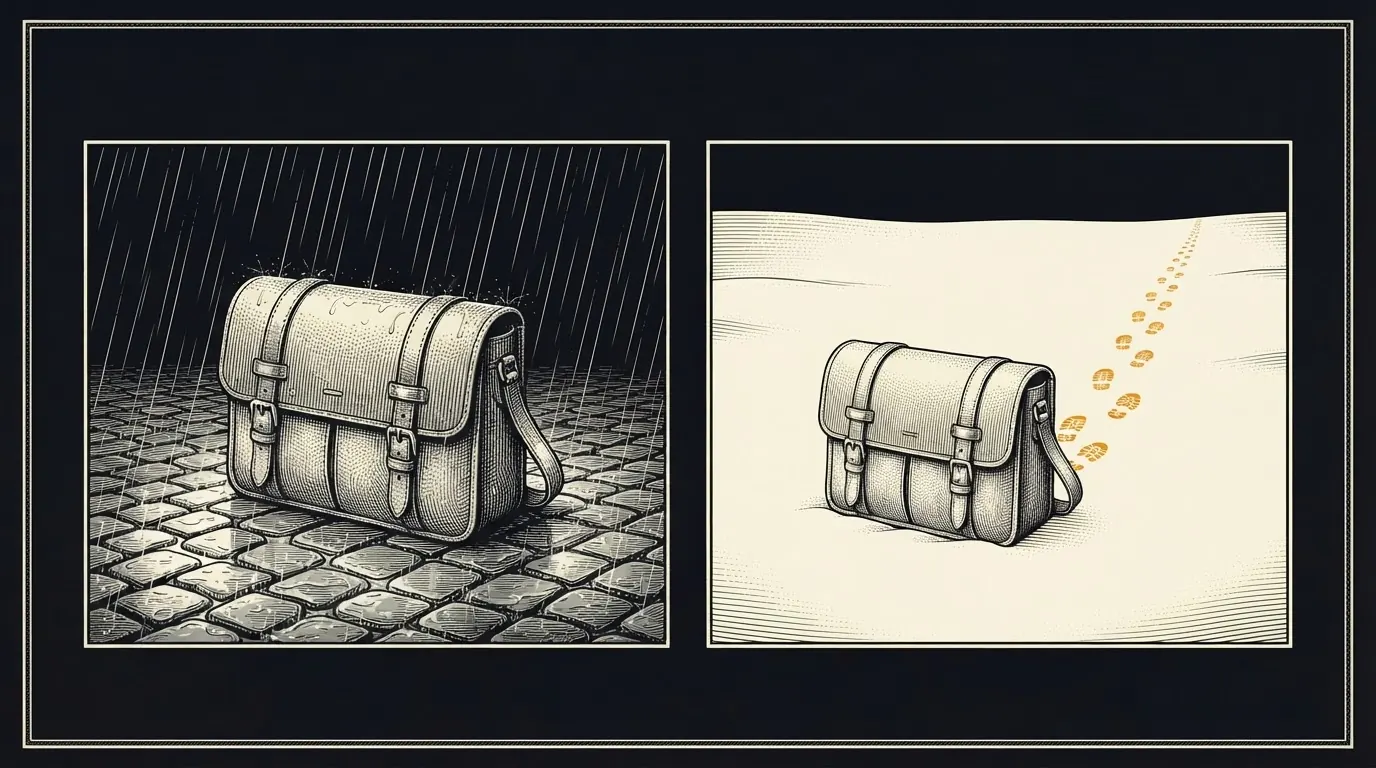
| DIMENSION | PHYSICAL CASH | BITCOIN |
|---|---|---|
| Permanent record | None. A $100 bill records nothing about who held it or why. | Every transaction since 2009 is public and permanent on the ledger, readable by anyone forever. |
| Traceability by police | Near zero once spent. Serial numbers are rarely logged in ordinary transactions. | High. Chain-analysis firms trace flows across addresses; the FBI does it routinely. |
| Share of global laundering | The dominant medium. The UN's ~$800B–$2T/yr estimate is overwhelmingly cash and banks. | A fraction of a percent of crypto volume (~0.34% in 2023, Chainalysis), tiny against the UN total. |
| Can stolen funds be clawed back? | Effectively no. Once cash is gone and mixed, it is gone. | Yes, repeatedly: ~63.7 BTCBitcoin (BTC)The ticker symbol for Bitcoin, used on exchanges and in price quotes.Full definition (Colonial), ~69,000 BTC (Silk Road), ~94,000 BTC (Bitfinex). |
| Anonymity | True anonymity. No name, no address, no record attaches to a bill. | Pseudonymity only. Addresses are not names, but the full transaction graph is public. |
| On/off ramps | Spend directly, no gatekeeper. | Most exchanges enforce KYCKnow Your Customer (KYC)Identity verification requirements that financial institutions use to confirm who their customers are.Full definition/AML; cashing out to dollars usually attaches an identity. |
Figures as of 2024–2026 reporting from Chainalysis and the UNODC; exact BTC amounts are from DOJ seizure filings. The traceability point is structural and stable.
Isn't Bitcoin anonymous, though?
No, and this is the single most misunderstood fact in the whole debate. Bitcoin is pseudonymous, not anonymous. Your addresses are not stamped with your name, but every transaction they ever make is public, permanent, and linkable. Once one address is tied to your identity, at a KYC exchange, through an IP leak, or a data breach, the ledger can be walked backward and forward to expose your entire history.
That is the opposite of what a criminal wants. A criminal wants no record. Bitcoin gives a total record that happens to use pseudonyms, which is why deanonymizing wallets is a solved commercial product. If you want to understand how much of your real-world identity leaks onto the chain, and how to reduce it legally, that is what the Bitcoin privacy guide is for. Note the distinction: privacy (keeping your finances your own business, a legitimate goal for anyone) is not the same as anonymity (leaving no trace, which Bitcoin does not provide).
The privacy that ordinary people reasonably want, not broadcasting your net worthnet worthEverything you own (assets) minus everything you owe (debts). The most comprehensive measure of financial health.Full definition and every purchase to the world, is a normal thing to want with any money, and it is the same privacy a cash transaction gives you at the store. Wanting that does not make you a criminal any more than closing your blinds does.
What about ransomware, darknet markets, and sanctions evasion?
These are real, and dismissing them is not honest. Ransomware crews demand Bitcoin. Darknet markets priced goods in it. Sanctioned states and entities have tried to use it to move value around the banking system. The objection is not made of nothing, so here is the steelman answered directly rather than waved away.
- Ransomware. Criminals demand Bitcoin because it is fast and borderless, but the same transparency that makes it convenient is why the FBI recovered ~63.7 BTC from Colonial Pipeline and why ransomware crews increasingly get traced and arrested. Cash-based extortion leaves no such trail. The tool that enables the crime also enables the clawback.
- Darknet markets. They existed, and Silk Road is the case study, but it ended with the site seized, the operator convicted, and ~69,000 BTC later recovered off the ledger. The public chain is why the takedown produced evidence, not why the crime was untraceable.
- Sanctions evasion. A public, monitored ledger is a poor place to hide state-scale flows. Chain-analysis firms flag sanctioned addresses, exchanges freeze them, and the Treasury sanctions mixing services directly. Cash, gold, and correspondent banking remain far larger and far harder to watch.
The pattern across all three: Bitcoin gets used for the crime, then the transparency of the ledger becomes the reason the crime gets solved. That is not a defense of the criminals. It is the reason "Bitcoin is for criminals" is backwards.
So is Bitcoin for criminals, or not?
Not. The verdict is that Bitcoin is a worse tool for crime than the cash and banking system we already use, because it trades away the one thing a criminal needs most, secrecy, for a permanent public ledger. The numbers hold up in both directions: a fraction-of-a-percent illicit share of crypto volume on one side, an $800 billion–$2 trillion cash-and-bank laundering problem on the other.
The objection persists because "new technology enables crime" is an easy headline and because the pseudonymous-versus-anonymous distinction is subtle. But the record, from Silk Road to Colonial Pipeline to Bitfinex, keeps demonstrating the same thing: on a transparent ledger, crime is easier to catch, not harder. If secrecy is the goal, cash still wins, which is exactly why criminals still overwhelmingly use it. For the broader set of objections and how they hold up, start with the objections hub.
No exchange, custodian, chain-analysis firm, or anyone else pays this site. See /how-this-site-makes-money/.
Related
- Chainalysis: Crypto Crime Report · chainalysis.com
- UNODC: Money Laundering overview · unodc.org
- US DOJ: Colonial Pipeline ransom seizure · justice.gov
Last updated 2026-09-25. Not financial advice. Illicit-share estimates and seizure figures are point-in-time; verify against the primary sources before relying on them.