What to do with your 401(k)
when you leave a job.
Compare leaving the plan, transferring eligible funds and taking a distribution. Taxes, possible penalties, plan costs and creditor protections depend on the account and your circumstances. Review direct-rollover instructions before moving money.
This page covers personal finance fundamentals that apply regardless of your view on Bitcoin or fiat currencyfiat currencyMoney declared legal tender by a government, not backed by a physical commodity. Its value rests on trust in the issuing government.Full definition.
This page covers US-specific accounts and tax law. Outside the US? The priority order is the same, the account names differ (ISAIndividual Savings Account (ISA)A UK tax-advantaged account where contributions are post-tax but all growth and withdrawals are tax-free.Full definition in the UK, TFSATax-Free Savings Account (TFSA)A Canadian tax-advantaged account where contributions are post-tax but all growth and withdrawals are tax-free.Full definition/RRSPRegistered Retirement Savings Plan (RRSP)A Canadian tax-deferred retirement account; contributions reduce taxable income and growth is tax-deferred until withdrawal.Full definition in Canada, Super in Australia, etc.).
Compare leaving the money in the former plan, transferring to an accepting new employer plan, or rolling into an IRA before choosing. A direct rollover is generally the lower-risk transfer route; an IRA is not automatically better. Preserve age-specific access, compare fees and legal protections, and check future Roth-conversion taxes before moving anything. [1] [2]
On this page
Your four options
Fine if the plan has excellent low-cost funds. Rare but happens. Bad if the plan has high fees, limited options, or you'll forget about it. Most people end up with scattered old 401(k)s they've lost track of.
Consolidation benefit: one account. Only a good idea if the new plan has good options. Check fees and fund choices before committing.
Full investment freedom: FSKAX, FZROX, VTI, bond funds, anything. Check outgoing-transfer, account and investment fees before rolling over. No taxes if done as a direct rollover. Compare costs, access, creditor protection and tax consequences before choosing. [2]
Worst option, always. 10% penalty under 59.5, plus ordinary income tax on the full amount verify×DON'T TRUST, VERIFYClaim: Early 401(k) distribution triggers 10% penalty plus ordinary income tax when under age 59.5.Verify at: IRS Topic 558 (early withdrawal penalty) ↗ · IRS early distribution rules ↗ Source 1 in the list below10% additional tax with limited exceptions; full amount also taxable at ordinary rates.. $50,000 cashed at 30 in the 22% bracket: ~$34,000 after penalty and tax. Same $50,000 rolled and compounded at 8% for 35 years: ~$740,000. You're giving up $700,000 to have $34,000 now.
How to do the rollover
- Open a rollover IRA at Fidelity, Vanguard, or Schwab. Takes 15 minutes online.
- Call your old plan administrator. Ask for a "direct rollover" to your new IRA. Give them the new IRA's account info.
- Wait. The transfer typically takes 1-3 weeks.
- Invest the new IRA balance. Money arrives as cash. Buy FSKAX, FZROX, VTI, or your target-date fund equivalent. Don't leave it in cash for long.
Direct vs indirect rollover
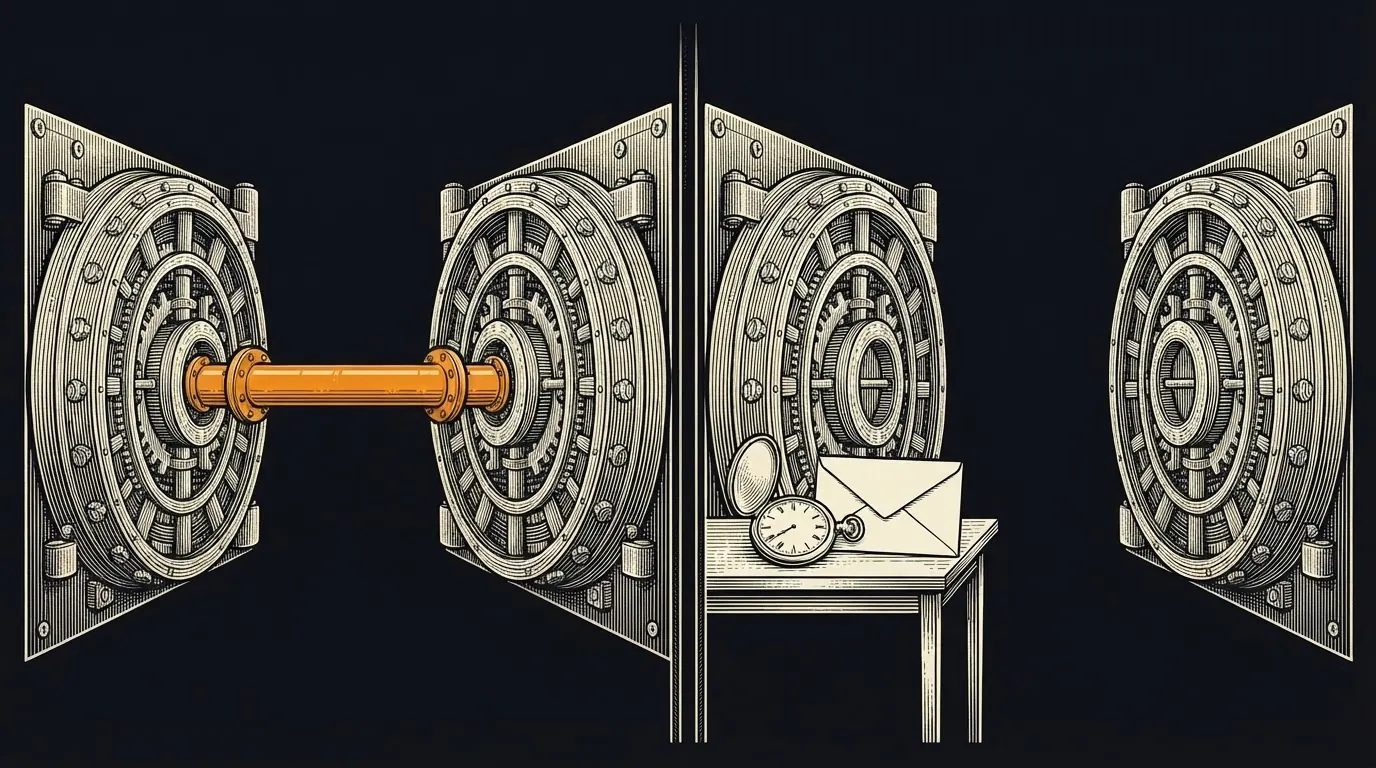
Indirect rollover: old plan sends you a check. You have 60 days to deposit it into the new IRA verify×DON'T TRUST, VERIFYClaim: Indirect rollovers must be completed within 60 days; plan withholds 20% for federal taxes.Verify at: IRS rollover rules ↗ · IRS Publication 590-A ↗ Source 2 in the list below60-day rule in IRC §402(c); 20% mandatory withholding on plan-to-participant distributions.. If you miss the deadline, the entire amount becomes taxable income plus the 10% penalty if under 59.5. Also, the old plan withholds 20% for federal taxes, and you have to make up that 20% from your own pocket to deposit the full amount, then claim it back at tax time. Don't do indirect rollovers unless you have a specific reason.
Traditional to Roth (partial conversion)
Rolling Traditional 401(k) to Traditional IRA: no taxes. Rolling to a Roth IRA: conversion, taxes owed now on the converted amount.
Worth considering if you're rolling during a low-income year (between jobs, sabbatical, early retirement). Fills low tax brackets with conversion income. Pairs with the Roth conversion ladder strategy.
Bitcoin in your rollover IRA
IBIT and FBTC (spot Bitcoin ETFsExchange-Traded Fund (ETF)A basket of investments (stocks, bonds, or Bitcoin) that trades on a stock exchange like a single share.) are available inside a Fidelity IRA. Self-directed IRAs allow direct Bitcoin ownership but are complex, have high fees, and only make sense at very large amounts. For most people, IBIT in a Fidelity rollover IRA is the simplest Bitcoin-in-retirement-account move. See Bitcoin ETF Guide.
Before moving the money: compare all three homes
US decision checklist, checked September 17, 2026. Obtain the old plan’s distribution notice and fee disclosure and the receiving plan/IRA terms before authorizing a transfer.
- Costs and investments: compare administrative/advisory fees, institutional fund prices, trading charges, available investments and services for the old plan, new plan and IRA. Do not assume a rollover is free. [2]
- Access: confirm whether leaving money preserves the separation-from-service age-55 exception, plan loan options, or a still-working RMD deferral. An IRA does not inherit those plan features. Check required distributions first; an RMD cannot be rolled over. [1] [2]
- Legal protection: ERISA-covered plan assets generally have broad federal creditor protection, with exceptions. IRA protection in bankruptcy and outside bankruptcy differs; outside-bankruptcy protection depends heavily on state law and the type of claim. Not all employer plans are ERISA-covered. Ask a qualified attorney about your jurisdiction and preserve records tracing qualified-plan rollover money; no account is universally lawsuit-proof. [2]
- Future backdoor Roth: adding pre-tax money to an IRA can increase the taxable share of a later conversion. Form 8606 generally aggregates your Traditional, SEP and SIMPLE IRA balances, including December 31 values, rather than looking only at the account converted. Model the pro-rata tax before rolling in; do not assume a separate rollover IRA avoids aggregation. [3]
- Special assets: ask about employer stock and net unrealized appreciation, after-tax basis, Roth balances and outstanding plan loans before making an irreversible election. A blanket IRA rollover can lose an advantageous treatment or create a taxable distribution. [1] [2]
If an eligible taxable plan distribution is paid to you, 20% is generally withheld; to roll over the entire gross amount within 60 days you must replace that withholding from other funds. Retain the request, check/payee instructions, confirmation, Form 1099-R and receiving-account records, and verify both receipt and investment allocation. A direct pre-tax-to-Roth rollover remains a taxable conversion to the extent the money is taxable. [1]
Where to go from here
Sources
Bracketed numbers and verify badges in the text link to these sources. Figures, rates and rules change: check each source’s date before acting on it.
Last updated . Not financial advice. US tax law. Disclosures · How pages are reviewed