Wills and trusts.
How they handle your assets.
Every adult with assets or children needs one of these two documents, often both. A will distributes assets at death through the probateprobateThe court-supervised process of validating a will, paying debts, and distributing assets after death. Slow, costly, and public.Full definition court. A trust holds assets during your life and after, bypasses probate, and stays private. Here is how to choose, what each costs, and how self-custodied Bitcoin complicates both.
A will distributes your assets through probate - public, slow, sometimes expensive. A revocable living trust holds assets during your life and passes them privately at death, no probate required. Most simple estates need a good will and nothing more. If your net worthnet worthEverything you own (assets) minus everything you owe (debts). The most comprehensive measure of financial health.Full definition is above $200K, you own property in multiple states, you have a blended family, or you want privacy, add a revocable trust. Either way, self-custodied Bitcoin needs a separate access plan because a document alone cannot sign a transaction.
On this page
Will vs trust - the core difference
A will is a set of instructions that only take effect when you die. It has to be validated by a probate court before anything moves. Probate is public, can take six to eighteen months, and in some states costs a fixed percentage of the estate.
A trust is a legal entity that holds assets right now. You transfer assets into the trust; the trust owns them; you typically serve as the trustee while alive. At death, a successor trustee takes over and distributes assets per the trust document. No court involvement. No public filings. No waiting.
A will says "when I die, give these things to these people, and here is who is in charge." A trust says "these things are already held by a legal entity. When I die, the entity keeps operating with a new person at the wheel." That one structural difference is why trusts skip probate.
The basic will
A will does four things. Names beneficiaries (who gets what). Names an executor (who carries it out). Names guardians for minor children if applicable. Handles any specific bequests or instructions.
A will does NOT: transfer assets with beneficiary designations (IRAs, 401(k)s, life insurance), transfer jointly owned assets with right of survivorship (those pass to the surviving owner automatically), or avoid probate (a will goes through court).
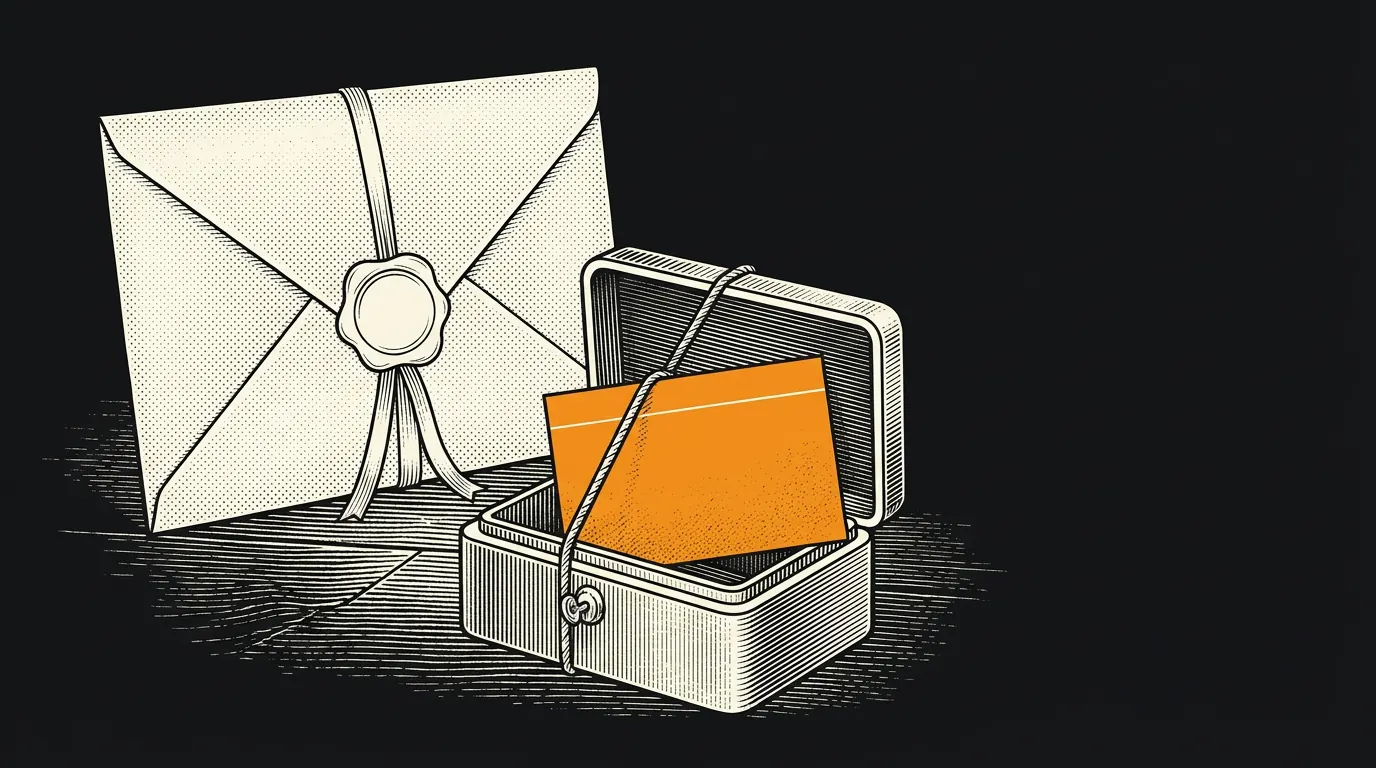
Most people need a will at minimum. Without one, state intestacy law controls, and the default outcomes rarely match what anyone wants. An unmarried partner receives nothing. Stepchildren receive nothing. Your assets pass in fixed percentages to legally defined relatives regardless of the relationships you had.
- DIY will: $100-500 using Nolo, LegalZoom, Trust & Will, or similar. Fine for simple situations.
- Attorney-drafted will: $500-1,500. Worth it for anything non-trivial.
- Handwritten (holographic) will: legal in about half of US states under strict rules. Error-prone. Not recommended.
The revocable living trust
"Revocable" means you can change or cancel it anytime while alive. "Living" means it exists and operates now, not at death. You are typically the grantor (creator), the trustee (manager), and the beneficiarybeneficiaryThe person or entity you name to receive an account or insurance policy when you die. (recipient) all at once while you are alive. At death, the successor trustee takes over.
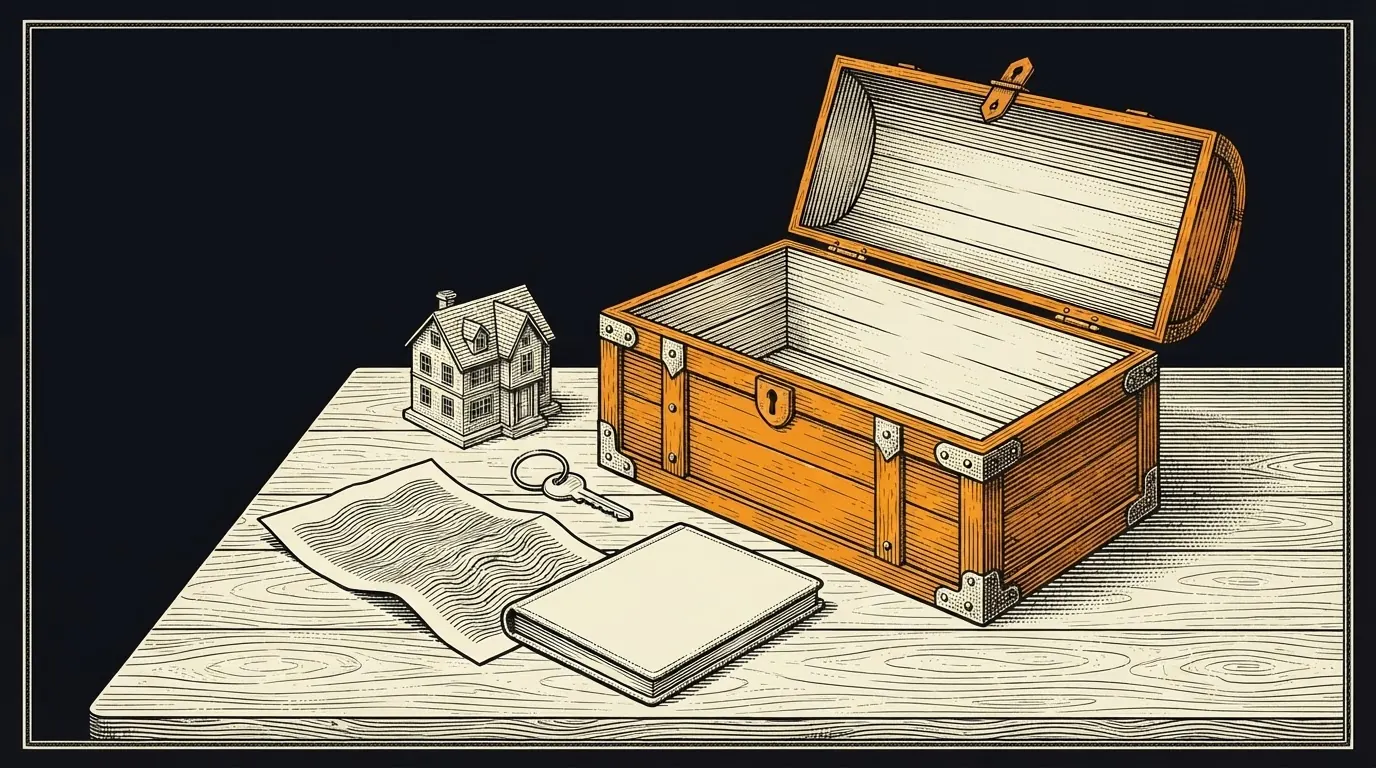
The key step that trips people up is funding. A trust on paper does nothing. You have to re-title assets into the trust's name. House deeds, brokerage accounts, business interests. An unfunded trust is a prop. The documents sit in a drawer, the assets go through probate anyway.
An attorney drafts the trust, hands over a binder, and the client never re-titles a single asset into the trust. Five years later, everything still goes through probate. If you set up a trust, book a follow-up specifically to verify funding.
Pour-over will
A pour-over will is the safety net that rides with a living trust. It says: anything I owned outside the trust at death "pours over" into the trust via probate and is then distributed according to the trust.
The pour-over still requires probate for whatever assets it catches, but it guarantees those assets reach the same distribution plan instead of being stranded under intestacy rules. Good backstop. Not a replacement for funding the trust properly in the first place.
Probate and how to avoid it
Probate is the legal process of validating a will and distributing assets under court supervision. People try to avoid it for three reasons: it is a public record (anyone can see what you owned and who received it), it takes 6-18 months in most states, and it can cost 3-8% of the estate in court and attorney fees verify×DON'T TRUST, VERIFYClaim: Probate typically takes 6-18 months and costs 3-8% of the estate.Verify at: American College of Trust and Estate Counsel ↗ Source 1 in the list belowACTEC publishes practitioner guidance; figures vary widely by state and estate complexity..
How to avoid probate
- Beneficiary designations. Accounts with named beneficiaries transfer directly, bypassing probate. Includes retirement accounts, life insurance, TOD (transfer-on-death) and POD (payable-on-death) accounts. Must be kept current; an ex-spouse named as beneficiary can still inherit.
- Joint ownership (JTWROSJoint Tenancy with Right of Survivorship (JTWROS)Two or more people own a home or account together; when one of them dies, the survivors automatically own the whole thing without going through a court.Full definition). Joint Tenancy with Right of Survivorship automatically passes to the survivor. No probate for that asset. Different from tenancy-in-common, which does go through probate.
- Living trust. Assets transferred into a revocable living trust bypass probate because the trust owns the asset, not you. Costs more to set up than a will. Requires ongoing maintenance: new assets must be re-titled in the trust's name.
For the full override rule and how to set designations, see Beneficiary Designations.
When you need a trust vs just a will
Rough guidelines. None of these are hard rules, state by state.
- Net worth above $200K. Probate fees start eating real money.
- Real estate in multiple states. Without a trust, you trigger a separate probate (ancillary probate) in every state where you own property.
- Privacy concerns. Probate files are public. Will contents, asset lists, beneficiary names, all searchable by anyone.
- Business ownership. Probate can halt operations. A trust keeps the business running through the transition.
- Blended family or complex beneficiaries. Second marriages, children from prior relationships, special-needs dependents. A trust gives you finer control over timing and conditions.
- Incapacity planning. If you become incapacitated, the successor trustee can manage trust assets immediately. Without a trust, even with a POA, some institutions drag their feet.
- Control over how and when heirs receive assets.
- Special-needs beneficiary. See Special Needs Planning.
- Estate approaching state estate-tax thresholds.
Below those thresholds, a well-drafted will plus correct beneficiary designations often does everything a family needs.
How Bitcoin fits
A trust can legally hold Bitcoin. That is the easy part. The hard part is that whoever is trustee at any given moment needs the technical ability to sign a transaction. That means access to the seed phraseSeed phraseA wallet backup written as a list of words, usually 12 or 24, that can recreate the wallet's private keys. In a single-signature wallet, anyone who sees it can take the bitcoin unless a separate passphrase also protects it. Keep it offline and private; recovery may also need the passphrase and wallet setup details.Full definition or the hardware wallet (or a enough subset, if you use multisig or Shamir).
Do not treat a self-custodied stack the same way you treat a Coinbase account. Writing "my BTCBitcoin (BTC)The ticker symbol for Bitcoin, used on exchanges and in price quotes.Full definition at Coinbase" in a will works because the exchange has a customer service process. Writing "my BTC in my cold wallet" in a will does not work because the will does not contain the thing that moves the coins.
Wills become public through probate. Anyone named in the probate docket can read the text. Putting seed words into a will is equivalent to posting them on a public bulletin board. Use a sealed letter of instructions that references your access setup instead, and see the Inheritance guide for the full pattern.
Consider a "digital assets memorandum," a private document (not part of the public will) that your executor knows exists and can access. Can include password manager, email accounts, social media, domain names, exchange accounts, and secure pointers to hardware wallets or seed phrase storage.
Healthcare directives and giving structures
Healthcare directives. A healthcare power of attorney (or healthcare proxy) names someone to make medical decisions if you cannot. A living will (advance directive) specifies what treatments you do or do not want in specific situations, such as terminal illness. Both should exist, and both are separate from your will and trust. See Living Will & Directive and Power of Attorney.
Giving and special structures. Each of these has its own page.
- Donor-advised fund (DAF). Give appreciated Bitcoin to charity without selling it first. See Bitcoin Donor-Advised Fund.
- Qualified charitable distribution (QCD). A direct transfer from an IRA to a qualifying charity. See QCDs from an IRA.
- Special needs trust. Holds assets for a disabled beneficiary without disqualifying them from government benefits (Medicaid, SSI). See Special Needs Planning.
- 1031 exchange. Defers capital-gains tax when business or investment real estate is exchanged for like-kind real estate. Real property only, so it does not apply to Bitcoin verify×DON'T TRUST, VERIFYClaim: Section 1031 like-kind exchanges are limited to real property. Bitcoin is not real property, so it cannot be exchanged tax-deferred under Section 1031.Verify at: IRS 1031 like-kind exchanges ↗ Source 2 in the list belowThe Tax Cuts and Jobs Act limited Section 1031 to real property from January 1, 2018. Exchanges of personal or intangible property no longer qualify.. See the exit strategies in House Hacking.
Cost range
- Will (DIY): $100-500
- Will (attorney-drafted): $500-1,500
- Simple will + healthcare directive (attorney): $500-1,500
- Revocable living trust (attorney-drafted): $1,500-3,000
- Full estate plan (trust, pour-over will, POAs, healthcare directives): $2,000-5,000
Budget a review every 3 to 5 years. Marriages, divorces, new kids, new homes, and state moves all change what the documents should say. A two-hour review is far cheaper than a contested probate.
Finding an attorney: State bar referral. ACTEC specialists ↗ for complex estates.
Where to go from here
Sources
Verify badges in the text link to these sources. Figures, rates and rules change: check each source’s date before acting on it.
- American College of Trust and Estate Counsel - actec.org ↩
- Internal Revenue Service, IRS 1031 like-kind exchanges ↩
- American Bar Association - Wills & Estates - americanbar.org
- Uniform Probate Code - state adoption and variation - uniformlaws.org
- Nolo Press - Living Trusts overview - nolo.com
- AARP - Probate cost and durationdurationA measure of how sensitive a bond price is to interest rate changes. A bond with 10-year duration falls roughly 10% in price when rates rise 1 percentage point. Longer duration = more interest rate risk. by state - aarp.org
- Trust & Will, LegalZoom pricing pages - trustandwill.com
Last updated . Not legal advice. For anything material, consult an estate attorney. Disclosures · How pages are reviewed